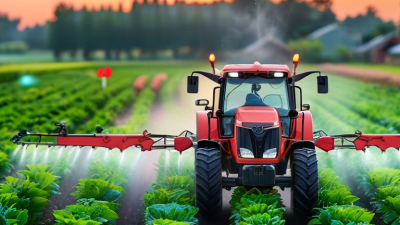
How to Choose Pesticides for Agriculture in 2026?
Choosing pesticides in agriculture in 2026 means matching a product to a crop, a confirmed pest, and local conditions. A leaf with spots is not always proof of disease, and an insect on a plant may not be causing meaningful damage. Correct identification comes first. So does checking whether non-chemical measures can help.
Rachel Carson, the biologist whose work shaped public understanding of pesticide risks, wrote, “In nature nothing exists alone.” That is a useful reminder when evaluating potential effects on pollinators, beneficial insects, soil, and nearby water. It is not a substitute for current, region-specific guidance. Read the product label carefully, confirm the intended crop and pest, and follow all applicable local requirements. Check the active ingredient, application timing, protective measures, and restrictions on use. Weather matters, too: wind or approaching rain can change the risks of an application.
A sound choice also considers resistance management, cost, and whether the treatment is likely to work under field conditions. Keep records of the pest, product, timing, and results; those details can improve future decisions. Small details matter. No checklist removes every uncertainty, and a product that worked last season may not be the right choice now. Use advice from qualified local agronomists or extension specialists, and verify recommendations against the label. The aim is not simply to spray less or more, but to make a justified, careful decision for the field in front of you.

Identify the Pest, Crop, and Level of Damage
A sound pesticide decision begins with the pest, not the product. Inspect several plants across the field, including leaf undersides, stems, and nearby weeds. Look for live insects, eggs, feeding patterns, or disease signs. A hole isn’t an identity. Similar damage can come from different pests, weather, or nutrient stress, so confirm the cause before treating.
Next, consider the crop and its growth stage. A seedling may suffer from damage that a mature plant can tolerate. Check whether the pest is attacking the crop you intend to protect, and note which parts are affected. Record what you see, where you see it, and whether the damage is spreading. A quick walk can miss early signs; repeat scouting after a few days when conditions allow.
Finally, estimate the level of damage rather than reacting to a single damaged leaf. Compare pest numbers and injury with locally recommended action thresholds, and consider beneficial insects that may already be reducing the problem. If identification remains uncertain, ask a qualified crop adviser or diagnostic service. It can feel slower than spraying immediately, but an incorrect treatment may waste time and harm useful organisms. If a pesticide is warranted, verify that its label covers the crop and target pest, then follow all label directions.
Consider Nonchemical Controls and Integrated Pest Management
In 2026, choose a pesticide only after confirming what is damaging the crop. Check leaf undersides, stems, and nearby weeds; look for fresh feeding, eggs, and disease patterns. That sounds basic. It is often skipped. FAO’s 2021 plant-health report estimates that plant pests and diseases destroy up to 40% of global crops each year. That figure supports careful action, not automatic spraying.
Integrated pest management combines prevention, monitoring, and targeted control. Rotate crops where practical, remove infected residues, use resistant varieties, and protect beneficial insects. Set a field-specific action threshold before treatment; a few aphids on one leaf may not justify spraying. Keep simple records of pest counts, weather, crop stage, and results. Small details matter. The FAO/WHO International Code of Conduct on Pesticide Management also emphasizes responsible pesticide use within broader pest-management systems. When nonchemical measures fall short, select a product registered for the crop and pest, then follow its label and local requirements. Recheck the field after treatment. If the pest returns, revisit the diagnosis and timing; repeated applications can mask a poor plan rather than fix it.
How to Choose Pesticides for Agriculture in 2026? - Consider Nonchemical Controls and Integrated Pest Management
| Crop and target pest | Nonchemical controls to consider first | When pesticide treatment may be justified | Pesticide options to evaluate | IPM selection and application considerations |
|---|---|---|---|---|
| Leafy vegetables — aphids | Scout leaf undersides; conserve lady beetles, lacewings, and parasitoids; remove heavily infested plants where practical; use insect-exclusion netting when suitable. | Consider treatment when scouting shows a locally validated action threshold has been reached, or when crop quality is at risk and natural enemies are not controlling the population. | Insecticidal soap or horticultural oil may be options where registered for the crop and pest. | Direct coverage to infested leaf surfaces and follow label directions. Avoid unnecessary broad-spectrum treatments that can harm beneficial insects. Check crop sensitivity and weather restrictions on the label. |
| Potatoes — Colorado potato beetle | Rotate potatoes away from the previous season’s fields; remove volunteer potato plants; use scouting and hand removal on small plantings. | Base decisions on counts of adults, egg masses, and larvae, using regional thresholds and crop growth stage. | Where locally registered, options may include Bacillus thuringiensis subsp. tenebrionis products for susceptible young larvae or other labeled insecticides. | Check that the product targets the life stage present. Rotate insecticide modes of action according to resistance-management guidance; repeated use of the same mode of action can select for resistance. |
| Brassica vegetables — caterpillar larvae | Use insect-exclusion row covers before pest arrival; remove crop residues and volunteer host plants; scout regularly for eggs and small larvae. | Treat only when monitoring indicates economically important feeding is likely and physical or biological controls are insufficient. | Bacillus thuringiensis subsp. kurstaki may be an option for susceptible young caterpillars where the use is registered. | Apply only to labeled crops and target pests. Coverage matters, and efficacy is generally greatest on small, actively feeding larvae. Protect non-target organisms by following label precautions. |
| Cucurbits — powdery mildew | Choose resistant or tolerant varieties when available; provide suitable plant spacing and airflow; avoid excessive nitrogen that promotes dense growth; monitor leaves for early symptoms. | Consider a fungicide when disease risk, crop stage, and local guidance indicate that treatment can protect yield or quality. | Use a fungicide registered for the crop and disease; sulfur is one possible option in some production systems and jurisdictions. | Check crop-specific restrictions and temperature limits. Sulfur can injure some crops and may be incompatible with oils when used too close together; follow the product label and local guidance. |
| Field crops — annual weeds | Use crop rotation, cover crops, competitive crop stands, stale seedbeds, and mechanical cultivation where appropriate. | Use herbicides only when weed species, density, growth stage, and expected crop loss justify intervention. | Evaluate only herbicides registered for the crop, site, and target weeds; select by labeled use and mode of action rather than trade name. | Rotate or combine effective modes of action as permitted by the label and resistance-management guidance. Prevent seed production by surviving weeds and avoid relying repeatedly on a single mode of action. |
| Orchards — insect pests affecting fruit | Monitor with traps and field scouting; remove infested fruit where practical; maintain habitat for natural enemies; use mating disruption or exclusion methods where suitable. | Time action using pest monitoring, degree-day or other regional models, and locally validated thresholds. | Choose a locally registered, pest-specific product with the narrowest practical impact on pollinators and beneficial organisms. | Check preharvest intervals, restricted-entry intervals, drift precautions, and pollinator safeguards. Avoid spraying flowering crops or flowering ground cover when prohibited or when pollinators are active. |
Selection rule: Identify the pest accurately, monitor its population, consider prevention and nonchemical controls, and treat only when justified. Registration, permitted crops, use directions, and restrictions vary by location and can change; always follow the current local product label and consult regional extension or crop-protection guidance.
Check 2026 Registration Rules and Product Labels
Choosing an agricultural pesticide in 2026 starts with checking whether the product is currently registered for your crop, target pest, and location. Registration is not universal: approvals and permitted uses can differ between countries and change over time. Check the relevant government pesticide register, then compare its current entry with the container label. The FAO/WHO International Code of Conduct on Pesticide Management provides guidance for responsible pesticide regulation and use.
Labels are working instructions, not optional fine print. Confirm the crop and pest appear, then check application rate, timing, maximum applications, pre-harvest interval, and re-entry interval. Match required protective equipment to the task, and follow directions for drift prevention, storage, and disposal. Tiny print is easy to overlook. A field checklist helps, though it cannot replace the full label. If the label is unclear or conflicts with an official register, pause and ask a qualified local adviser.
FAOSTAT reported global agricultural pesticide use of 3.70 million tonnes in 2022, a 4% increase from 2021. That figure describes active ingredients, not a recommendation for any farm. It does underline why careful use matters. Record the registration source, label revision date, field, rate, and application date. Review the label again before each season; last year’s approval may not cover this year’s use.
Compare Effectiveness, Resistance Risks, and Environmental Impacts
Choosing pesticides in 2026 starts with identifying the pest, not browsing products. Confirm its species and life stage; a treatment effective against larvae may miss adults. Compare independent trial data, agricultural extension guidance, and the product label’s target pests. Timing matters, too. Spraying after substantial damage appears may not protect the remaining crop. A small untreated comparison area can help reveal whether the treatment made a difference. Field results vary.
Effectiveness is only one measure. Check the mode of action and avoid repeatedly using products that affect pests in the same way. Repeated exposure can favor resistant individuals, making future control harder. Environmental risks also differ: consider persistence, drift, runoff, and potential harm to pollinators or aquatic life. Weather, soil, and nearby water can change exposure. It is easy to overvalue a clean-looking field; that alone does not prove success. Follow the label, including protective equipment and any required buffer guidance.
Tips: Scout before treating, record pest counts and dates, and reassess after application. Consider crop rotation, barriers, or biological controls where practical. Check local agricultural guidance before choosing a treatment. If the pest identification is uncertain, pause and verify it.
How to Choose Pesticides for Agriculture in 2026?
Compare effectiveness, resistance risks, and environmental impacts
How to read this chart: FRAC resistance-risk categories are shown as an ordinal scale: Low = 1, Medium = 2, and High = 3. These are qualitative categories, not measurements of field effectiveness or environmental harm. Effectiveness depends on the crop, target organism, local resistance patterns, and label directions. Assess environmental impacts for the specific active ingredient and use pattern before choosing a product.
Sources: FRAC Code List; consult local pesticide labels and applicable environmental guidance.
Plan Safe Application, Monitoring, and Recordkeeping
A pesticide choice should begin with the pest, crop, and level of damage, not a familiar product name. Confirm the label lists the intended crop and target pest, then follow its directions for rates, protective clothing, application timing, and re-entry. If the label is unclear, pause and consult a qualified agricultural adviser. Do not guess. Check the sprayer for leaks and calibrate it with clean water before filling. A steady walking pace and an even nozzle pattern can matter more than an impressive-looking tank. Avoid spraying when wind may carry droplets toward people, neighboring crops, or water.
Keep people and animals away as directed, and store equipment securely after use. Clean it only as the label instructs. Monitoring starts before treatment: note pest numbers, crop condition, and a few marked locations in the field.
Recheck those same spots after application, and record the date, product active ingredient, rate, weather, equipment settings, and observed results. Keep it factual. A simple notebook works, though it is easy to forget details when work gets busy. Those notes can show whether treatment helped, caused crop stress, or needs professional review. A plan may look sound on paper, yet field conditions can expose a wrong assumption.
Related Posts
-
2026 Top Pesticides in Agriculture Trends for Global Buyers
-
2026 How to Choose Pesticides for Plants?
-
Top 10 Farm Chemicals You Need to Know for Successful Agriculture?
-

How to Source Corteva Chemicals for Global Buyers?
-
Why Is Effective Pesticide Control Essential for Sustainable Agriculture?
-
Top 10 Pesticides in Agriculture You Should Know About?