NACL Industries Limited

China Top Pesticides for Plants Suppliers for Global Buyers

China has become a major sourcing hub for pesticides for plants, serving farms, nurseries, orchards, and professional landscapers worldwide. Global buyers often compare formulation quality, production capacity, documentation, and technical support before approving a supplier. The right choice is not always the lowest quotation.

A reliable Chinese supplier should provide clear active-ingredient specifications, batch numbers, safety data sheets, certificates of analysis, and traceable production records. Buyers should also review local registration requirements before importing or applying any product. Approved use depends on the crop, target pest, application rate, and national regulations. Small details matter. A clean label matters. So does stable packaging after long sea transport.

Environmental scientist Rachel Carson wrote, “The chemical war is never won, and all life is caught in its crossfire.” Her warning remains relevant when buyers assess modern pesticides for plants. Responsible suppliers should support integrated pest management, accurate application, resistance management, and protection of beneficial insects. They should discuss risks honestly, not promise perfect control.

This guide introduces leading Chinese suppliers for global buyers. It considers manufacturing experience, research capability, quality systems, export records, and customer service. However, no supplier ranking can replace independent verification. Even an experienced buyer may overlook a changed formulation, delayed certificate, or weak after-sales response. That is an uncomfortable limitation.

Careful sourcing takes time. Ask direct questions. Request current documents. Test suitability through lawful, controlled procurement procedures before making larger decisions.
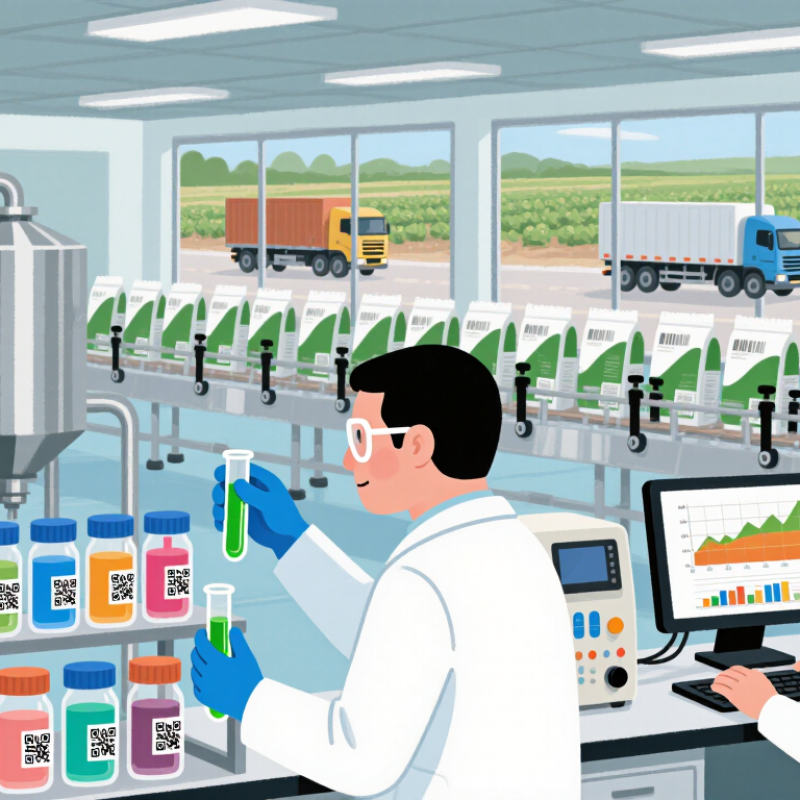
China Top Pesticides for Plants Suppliers for Global Buyers

Types of Plant Pesticides Supplied by Chinese Manufacturers

Chinese manufacturers supply several plant pesticide categories for global buyers, with formulations suited to different crops and climates. Insecticides target chewing and sucking pests, including aphids, thrips, and caterpillars. Fungicides help manage powdery mildew, leaf spots, and other fungal diseases. Herbicides control unwanted grasses and broadleaf weeds around crops.

Acaricides are used against mites, which often thrive in hot, dry fields. Chinese suppliers also produce biological pesticides containing microbial or botanical active ingredients. These options may support integrated pest management when applied at the correct growth stage. Plant growth regulators form another category, influencing rooting, flowering, fruit size, or crop maturity. Their use requires careful crop-specific guidance.

Reliable sourcing involves more than comparing prices. Buyers should request active ingredient details, formulation data, safety documentation, batch testing, and traceability records. Export products must meet the destination market’s registration and residue requirements. A product approved for one crop may be unsuitable elsewhere. Local trials matter. Weather changes results. Even experienced growers can misjudge dosage, spray timing, or resistance risk. Chinese manufacturers with technical teams may provide label guidance, compatibility advice, and sample testing before larger orders. Still, buyers should verify every claim independently and consult local agronomists. Product quality can vary between batches without disciplined quality control.

Key Regions and Production Hubs for China’s Pesticide Industry

China’s pesticide industry is concentrated in several production hubs. Jiangsu and Zhejiang support large chemical manufacturing clusters, especially for active ingredients and formulated plant protection products. Shandong is known for broad chemical capacity, strong logistics, and access to northern agricultural markets. Hubei and Anhui also contribute important production, formulation, and packaging facilities. These regions connect efficiently with ports such as Shanghai, Ningbo, and Qingdao.

Regional strengths can differ sharply between factories. One supplier may operate an advanced formulation line, while another mainly handles contract production. Global buyers should check production licenses, product registration requirements, batch records, laboratory testing, and traceability before placing orders. A reliable supplier should provide consistent specifications, safety data sheets, certificates of analysis, and clear packaging details. Port distance matters too. A cheaper factory inland may create higher transport costs and slower delivery.

Tips: Ask for a recent factory audit or live video inspection. Compare batch consistency, not only price. Confirm whether the supplier produces the product or outsources it. Review samples under practical storage conditions, because heat and humidity can affect stability. A low quotation can look attractive, yet it may hide weaker quality control. The regional map is useful, but it is not enough. Production capacity, compliance systems, and communication habits often decide the real sourcing result.

China Top Pesticides for Plants Suppliers for Global Buyers - Key Regions and Production Hubs for China’s Pesticide Industry
Key Region Representative Production Hubs Main Industry Characteristics Common Product Orientation Logistics and Export Access Buyer Due-Diligence Priorities
Jiangsu Taizhou, Nantong, Yangzhou, Lianyungang One of China’s important fine-chemical and agrochemical manufacturing bases, with established chemical parks and supporting intermediate industries. Herbicide technicals Fungicide technicals Insecticide technicals Intermediates Strong access to the Yangtze River Delta supply chain, Shanghai-area ports, and domestic chemical transport networks. Check chemical-park location, production-license scope, environmental compliance, batch consistency, and export documentation.
Zhejiang Huzhou, Ningbo, Shaoxing, Quzhou Highly developed coastal chemical-manufacturing region with strong capabilities in fine chemicals, crop-protection intermediates, and formulation support. Fungicides Insecticides Herbicides Formulations Close to Ningbo-Zhoushan and other eastern seaports, providing efficient containerized export routes. Verify active-ingredient assay, impurity profile, formulation stability, packaging compliance, and registration support.
Shandong Weifang, Binzhou, Dezhou, Jinan Large petrochemical, salt-chemical, and agricultural-chemical ecosystem supported by broad raw-material and industrial-infrastructure resources. Herbicide products Insecticide products Fungicide products Adjuvants Convenient access to Qingdao Port and northern China transport corridors. Assess source and traceability of key intermediates, wastewater treatment, safety records, and capacity during peak seasons.
Hubei Jingzhou, Yichang, Xiangyang, Wuhan Central China production region connected with phosphorus chemistry, agricultural inputs, and chemical-processing infrastructure. Fungicides Herbicides Phosphorus-related products Intermediates Yangtze River transportation supports movement toward eastern ports and inland Chinese markets. Review phosphorus and other feedstock traceability, water-management controls, technical-equivalence data, and delivery schedules.
Anhui Hefei, Chuzhou, Wuhu, Maanshan Emerging and established chemical-manufacturing clusters benefiting from proximity to the Yangtze River Delta and central agricultural markets. Herbicides Fungicides Formulated products Intermediates Good road, rail, and river connections to Shanghai-area ports and inland distribution centers. Confirm whether the production site is licensed for the requested category and whether export-quality testing is performed in-house or externally.
Sichuan Chengdu, Deyang, Leshan, Meishan Important western China chemical region with access to phosphorus, nitrogen, and other industrial raw materials, as well as a large agricultural market. Fungicides Herbicides Plant-growth regulators Intermediates Chengdu-Chongqing economic links, rail freight, and road transport support movement to coastal export gateways. Evaluate inland-to-port transit times, packaging durability, hazardous-goods handling, and continuity of raw-material supply.
Hebei Cangzhou, Shijiazhuang, Hengshui, Tangshan Northern chemical-manufacturing base serving the North China agricultural market and connected with large industrial parks. Herbicide technicals Insecticide technicals Fungicide technicals Intermediates Access to Tianjin Port, Bohai Economic Rim logistics, and northern rail and highway networks. Check environmental permits, site inspection records, winter production policies, and stock availability before contracting.
Liaoning Dalian, Fushun, Yingkou, Panjin Northeast China chemical and petrochemical base with port-oriented manufacturing and access to established bulk-chemical infrastructure. Herbicides Insecticides Chemical intermediates Formulations Dalian and other Bohai-region ports provide access to Northeast Asian and global shipping routes. Review cold-weather storage requirements, marine shipment experience, hazardous-goods classification, and port transit arrangements.
Jiangxi Jiujiang, Nanchang, Ganzhou, Fuzhou Southern inland chemical region with links to fine chemicals, fluorine chemistry, and agricultural-input manufacturing. Herbicides Fungicides Fluorinated intermediates Formulations River, highway, and rail connections lead toward Shanghai, Ningbo-Zhoushan, and South China ports. Request impurity limits, fluorine-related compliance records where applicable, SDS documentation, and stability data.
Henan Puyang, Kaifeng, Xinxiang, Zhengzhou Central China chemical and agricultural-input region positioned near major grain-producing areas and national transport corridors. Herbicides Fungicides Insecticides Fertilizer-related inputs Central location supports domestic distribution and multimodal transport to coastal export ports. Confirm export packaging standards, product registration status in the destination market, and supply continuity during agricultural seasons.
Fujian and Guangdong Quanzhou, Fuzhou, Guangzhou, Jiangmen, Zhanjiang South and southeast coastal regions with strong formulation, repackaging, trading, and agricultural-input distribution activity. Formulated pesticides Water-soluble products Biopesticide-related products Adjuvants Direct access to major South China ports and shipping routes serving Southeast Asia, South Asia, Africa, and Latin America. Verify formulation registration, tropical-storage stability, label language, container compatibility, and local-market compliance.
Buyer screening note: Regional location is an industry-cluster indicator, not a guarantee of supplier qualification. Global buyers should independently verify pesticide registration, production permits, quality certificates, safety data sheets, analytical reports, environmental compliance, and destination-market requirements.
Data basis: Regional industry patterns are compiled from publicly available information on China’s chemical-industry parks, agricultural-input manufacturing regions, port infrastructure, pesticide regulatory requirements, and national statistical publications. Product categories are shown at industry level and do not identify any company or brand.

Quality Standards and Certifications for Global Buyers

For global buyers, quality begins with traceable manufacturing, not attractive packaging.

FAOSTAT reported approximately 3.70 million tonnes of pesticides used worldwide in 2022. This scale makes supplier verification essential. Buyers should request batch numbers, manufacturing dates, active-ingredient assay results, and certificates of analysis. Each document should match the physical container.

Reliable suppliers normally operate documented quality systems, often aligned with ISO 9001. Testing laboratories should demonstrate ISO/IEC 17025 competence, including validated methods, calibration records, and controlled sample handling.

Good Laboratory Practice supports credible studies on stability, toxicity, and environmental behavior. Yet certification alone is not proof.

A weak audit can miss inconsistent mixing, damaged seals, or storage above the required temperature.

Export documentation should include a current safety data sheet, transport classification, and clear use instructions. Residue testing must address the destination market’s maximum residue limits, including Codex guidance where applicable.

The OECD reported that agricultural land represented about 36% of global land use in recent assessments, highlighting the importance of responsible chemical management.

Buyers can improve confidence by requesting independent pre-shipment testing and comparing results with supplier data. Small details matter: a sealed sample, legible label, and refrigerated retention specimen can reveal process discipline.

Some suppliers provide impressive files but limited field evidence. That gap deserves careful questioning, especially when crop conditions differ across regions.

How to Evaluate China’s Plant Pesticide Suppliers

When evaluating China’s plant pesticide suppliers, I look beyond product catalogs and attractive quotations. A reliable supplier should provide clear company records, manufacturing qualifications, product registrations, and export documentation. These records must match the destination country’s agricultural rules. Local approval is essential.

Request a current specification sheet, safety data sheet, certificate of analysis, and batch number. Check active ingredient content, formulation type, shelf life, packaging, and storage conditions. Ask how raw materials are traced and how rejected batches are handled. A serious technical team should explain compatibility, application limits, crop safety, and residue requirements in plain language. Vague answers deserve caution.

I once treated a polished catalog as proof of quality. That was a mistake. During supplier reviews, I now request recent batch documents and, where permitted, independent laboratory testing. Small trial orders can reveal labeling errors, unstable packaging, slow responses, or inconsistent material. Keep written records of samples, test methods, delivery conditions, and corrective actions. A supplier’s communication matters as much as its factory. If representatives pressure buyers to skip registration checks or provide incomplete documents, stop the evaluation. Practical experience also shows that the lowest price may hide weaker traceability, limited technical support, or higher inspection costs. Conditions change. Recheck certificates before each major order.

Import, Compliance, and Logistics Considerations for International Orders

China Top Pesticides for Plants Suppliers for Global Buyers

International buyers should evaluate Chinese agricultural pesticide suppliers through registration, documentation, and supply consistency. FAO’s Pesticides Use and Trade 1990–2022 report recorded 3.70 million tonnes of pesticide active ingredients used worldwide in 2022. This scale reflects strong demand, but not every exporter meets the same compliance standard. Request the product registration certificate, composition statement, batch analysis, safety data sheet, and certificate of origin. Confirm that the active ingredient is permitted in the destination market.

Import rules vary sharply. The United States applies FIFRA requirements, while the European Union uses Regulation (EC) No 1107/2009 for plant protection products. Buyers should verify maximum residue limits, packaging language, labeling symbols, and importer responsibilities before payment. The Rotterdam Convention’s prior informed consent procedures may apply to certain listed chemicals. Check the exact product and destination.

Logistics requires practical preparation. Many formulations may fall under dangerous-goods transport rules, including the IMDG Code for sea freight and IATA rules for air cargo. Use UN-approved packaging, accurate HS classification, and complete shipping declarations. A freight forwarder should review container compatibility and temperature exposure. Small errors cause delays. Supplier audits, independent laboratory testing, and pre-shipment inspections strengthen reliability. However, certificates can become outdated, and online claims may be incomplete; buyers should verify every document with the issuing authority. FAO data supports market scale, not supplier quality. That distinction matters.

China Pesticide Import Readiness: Key International Reference Frameworks

International buyers should verify product hazard classification, transport status, labeling, documentation, and delivery terms before placing an order. The chart shows the number of standardized categories or rules in widely used international frameworks.

Reference data: WHO Recommended Classification of Pesticides by Hazard includes five hazard bands; the UN GHS uses nine hazard pictograms; the UN dangerous goods system contains nine transport classes; and Incoterms® 2020 contains eleven trade rules. Product registration, maximum residue limits, import permits, and transport requirements vary by destination market.

Contact Us

Reach out to our dealer network