Top Edible Emulsifiers for Global Buyers in 2026?
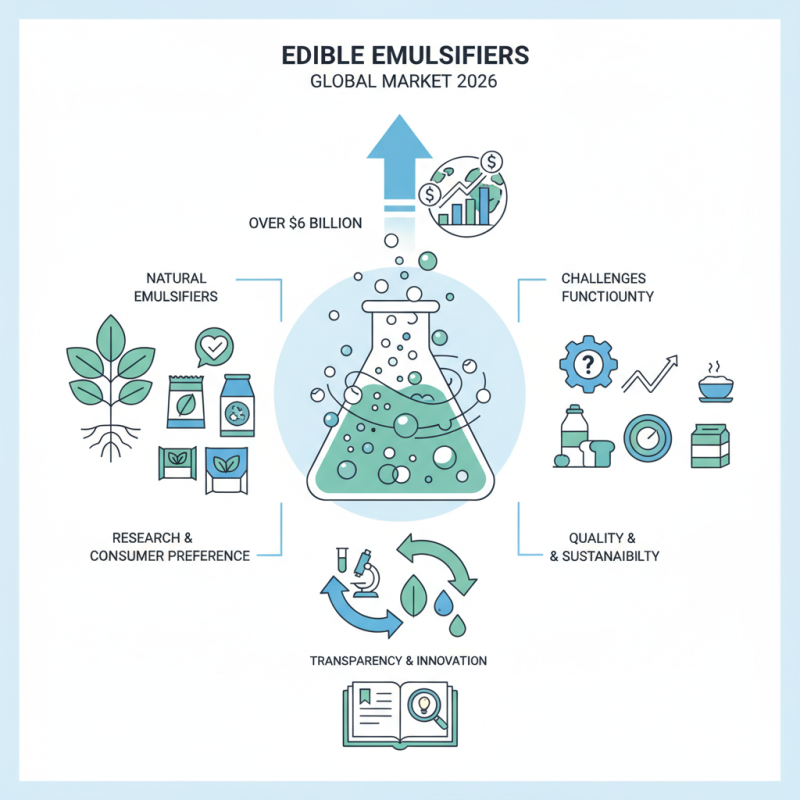
The global market for Edible Emulsifiers is set to expand significantly by 2026. According to industry reports, the edible emulsifier market is projected to reach a value of over $6 billion. This growth reflects increasing consumer awareness regarding food quality and safety. Edible emulsifiers play a crucial role in food technology by stabilizing mixtures and improving texture.
In this evolving sector, natural emulsifiers are gaining popularity due to health trends. Studies indicate that consumers prefer products with clean labels. This demand drives innovation in sourcing natural ingredients. However, not all emulsifiers deliver the required performance. There are challenges regarding consistency and functionality across various applications.
Addressing these concerns requires continuous research and development. Consumers are increasingly discerning, emphasizing the need for reliable and effective emulsifiers. As suppliers navigate these complexities, the focus remains on quality and sustainability. The path forward involves a commitment to transparency and innovation in the formulation of Edible Emulsifiers.
Overview of Edible Emulsifiers: Definition and Function
Edible emulsifiers play a crucial role in the food industry. They help to blend ingredients that typically don’t mix well, like oil and water. This process is essential for various food products, including sauces, dressings, and baked goods. According to recent industry reports, the global emulsifiers market was valued at approximately $4 billion in 2020 and is projected to grow significantly by 2026.
These emulsifiers enhance texture, stability, and shelf life. The demand for natural ingredients has grown. Consumers are increasingly seeking products free from synthetic additives. This shift drives the use of plant-based emulsifiers, such as lecithin and xanthan gum. Data indicates that natural emulsifiers are expected to capture a larger market share, projected to grow by 5% annually.
While emulsifiers have many benefits, not all are created equal. Some ingredients may cause adverse reactions in sensitive individuals. Industry experts suggest that manufacturers should thoroughly test new formulations. Continuous research is necessary to ensure the safety and efficacy of emulsifiers. As the market evolves, staying updated on consumer preferences and technological advancements will be essential for success.
Global Market Trends in Edible Emulsifiers for 2026
The global market for edible emulsifiers is poised for significant growth in 2026. With increasing consumer awareness, the demand for natural and clean-label ingredients is rising. This shift impacts sourcing and production strategies for many companies. Emulsifiers derived from plant sources are gaining traction due to their perceived health benefits.
Emerging trends reveal that buyers are exploring alternatives to synthetic emulsifiers. Many seek options that enhance texture without compromising taste. The importance of sustainability in sourcing is undeniable. Brands are focusing on reducing their carbon footprint. This aligns with consumers' growing preference for environmentally-friendly products.
Challenges remain in the form of price volatility. Natural emulsifiers often come at a higher cost. Suppliers must innovate while maintaining quality. This scenario demands adaptability and creativity from manufacturers. Transparency in ingredient sourcing is critical. Companies struggling in this area may find themselves at a disadvantage. The complexity of global trade can also hinder access to raw materials. Overall, the edible emulsifier market is evolving rapidly, offering both challenges and opportunities for buyers.
Top Edible Emulsifiers for Global Buyers in 2026
| Emulsifier Type | Applications | Market Share (%) | Growth Rate (%) | Key Regions |
| Lecithin | Baked goods, beverages | 25 | 5 | North America, Europe |
| Mono- and Diglycerides | Frozen desserts, margarine | 20 | 4.5 | Asia-Pacific, Latin America |
| Sorghum Protein | Plant-based foods, sauces | 15 | 6 | Europe, North America |
| Starch Esters | Dressings, dairy products | 10 | 3.5 | Asia-Pacific, Middle East |
| Glycerol Monostearate | Confectionery, bakery | 30 | 7 | North America, Asia-Pacific |
Key Types of Edible Emulsifiers and Their Applications
Edible emulsifiers play a crucial role in food formulation. They help blend ingredients that normally do not mix, like oil and water. Common types include lecithin, mono- and diglycerides, and polysorbates. Lecithin, often sourced from soybeans or egg yolks, is popular in sauces and dressings. It provides texture and stability.
Utilizing emulsifiers can improve food quality. They enhance mouthfeel and extend shelf life. In baked goods, emulsifiers prevent staling, ensuring freshness. However, not all emulsifiers are equally effective. The choice depends on specific applications. For instance, some emulsifiers work better in high-fat foods, while others excel in low-fat products.
Many manufacturers face challenges when selecting emulsifiers. They must consider factors like regulatory requirements and labeling. Understanding the functionality of each type is essential. Emulsifiers can alter the texture and flavor of products. It’s important to test formulations to find the right balance. This requires both expertise and experience in food science.
Regulatory Standards for Edible Emulsifiers Worldwide
The regulatory landscape for edible emulsifiers is evolving. In 2026, global buyers will navigate a complex framework. Key standards are set by organizations like the FDA and EFSA. These guidelines ensure food safety and product consistency.
Recent industry reports reveal that the demand for emulsifiers is rising. The global market for edible emulsifiers is projected to reach $2.5 billion by 2026. This growth highlights the importance of compliance with safety standards. Notably, consumer health trends demand cleaner labels. This forces manufacturers to pivot toward natural emulsifiers.
However, challenges remain. Some emulsifiers face scrutiny over health impacts. Continuous monitoring of scientific data is necessary. Companies must stay ahead of regulatory changes to avoid disruptions. Collaboration with regulatory bodies can enhance transparency and mutual understanding. Adapting to these evolving norms is not just a compliance issue; it's essential for maintaining consumer trust.
Future Innovations and Sustainability in Emulsifier Production
The quest for sustainability in emulsifier production is increasingly relevant. Producers are now embracing eco-friendly raw materials. This shift reduces reliance on petroleum-based sources. Many innovators are focusing on plant-based options. These alternatives are often biodegradable and safe for human consumption.
Emerging technologies also play a key role. Advances in fermentation processes could enhance the efficiency of emulsifiers. However, these methods may require further research and development. It's vital to ensure these innovations do not compromise food safety. The challenge lies in balancing performance with sustainability.
As the market evolves, consumer demand shapes future emulsifier trends. Transparency in sourcing and processing is non-negotiable. Manufacturers must communicate their practices clearly. Establishing trust with consumers is essential for long-term success. Reflection on these changing dynamics will be critical for industry players.