
Top 10 E Vape Cig Types for Global Buyers?
Choosing among the top 10 E-Vape Cig types requires more than comparing flavors, battery sizes, or glossy packaging. Global buyers need evidence, traceability, and clear compliance information. Product design also matters. A compact pod may suit a commuter, while a refillable device may better serve an experienced adult user seeking lower waste.
The Global State of Tobacco Harm Reduction 2024 estimates approximately 114 million people vape worldwide. That figure shows market scale, but it does not prove that every product is suitable or safe. The World Health Organization continues to stress that electronic nicotine products carry health risks and require careful regulation. Therefore, this guide focuses on legal, commercially available categories for adults, including closed pods, open systems, disposable-free alternatives, and regulated heated options where permitted.
Ann McNeill, a leading tobacco-control researcher, wrote, “The current best estimate is that e-cigarettes are around 95% less harmful than smoking.” That statement came from Public Health England’s 2015 evidence review. It should not be treated as a guarantee. Evidence evolves. Product quality varies. Some comparisons remain imperfect.
This article examines ten E-Vape Cig types through practical criteria: manufacturing transparency, battery safety, ingredient disclosure, durability, user control, and regional availability. Buyers should check age restrictions, nicotine rules, certification marks, and import requirements before purchasing. A familiar label is not enough. A lower price can hide weaker quality control. The best choice may still depend on local law, intended use, and verified product information.
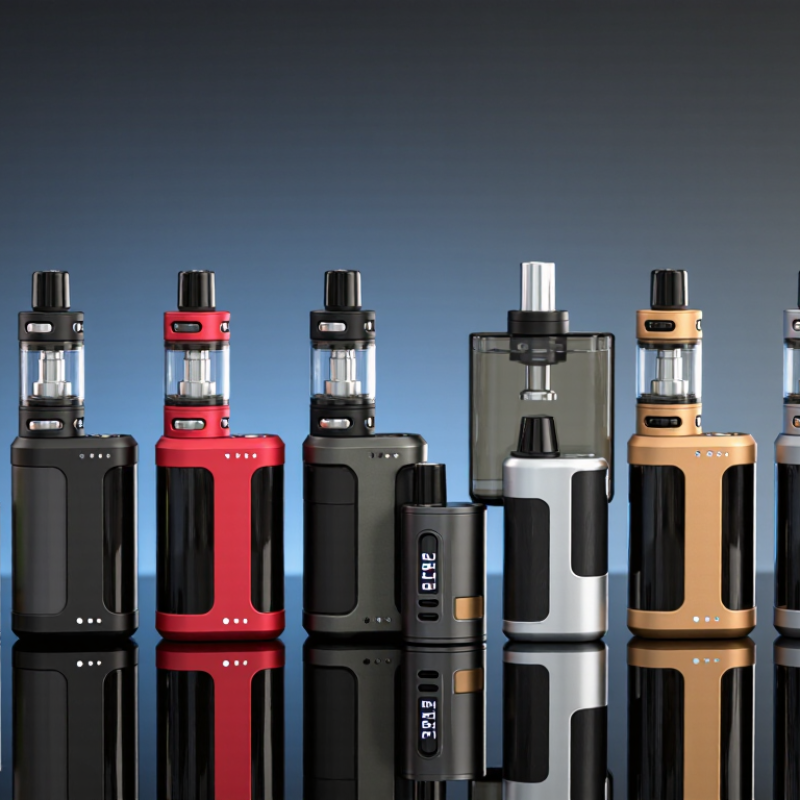
E-Vape Cigarette Categories and Their Core Differences
E-vape cigarette categories differ mainly by power, airflow, filling method, and user control. Disposable vapes arrive prefilled and sealed, while rechargeable pod systems use replaceable cartridges. Prefilled pods offer convenience. Open pods allow users to refill compatible e-liquid legally. Vape pens provide larger batteries and tanks. Box mods deliver higher power and broader adjustment. Squonk devices feed liquid through a squeeze bottle. MTL devices imitate a cigarette-like draw. DTL devices create a more open inhale. Nicotine-free versions form another category. Heated-tobacco products should remain separate because they heat tobacco, not e-liquid.
The differences affect cost, maintenance, vapour volume, and portability. Disposable designs suit short-term convenience, but create more battery and waste-management concerns. Refillable systems usually reduce packaging, although they demand cleaning and coil replacement. Higher-power devices can consume liquid quickly. They also require stronger technical knowledge. This distinction matters for global buyers because product rules vary by country.
The World Health Organization estimated 82 million e-cigarette users worldwide in 2021, showing broad demand but not uniform consumer needs. Grand View Research’s 2024 market assessment also identified continued growth in electronic-cigarette sales. However, market reports often use different definitions. Their comparisons are not perfectly reliable. Buyers should verify nicotine limits, labeling rules, battery standards, and recycling requirements with local authorities before purchasing. Safety data also remains incomplete. Convenience should not replace careful evaluation.
Top 10 E Vape Cig Types for Global Buyers? - E-Vape Cigarette Categories and Their Core Differences
| No. | E-Vape Cigarette Type | Core Structure | Refill Method | Power and Battery | Typical Nicotine Format | Vapor Output | Main Advantages | Main Limitations | Best Suited For |
|---|---|---|---|---|---|---|---|---|---|
| 1 | Closed-System Pod | Compact battery with sealed, prefilled liquid pods | No user refilling; replace the pod | Small rechargeable battery; USB charging is common | Often nicotine salts; nicotine-free options may also be available | Low to moderate; usually mouth-to-lung | Simple operation, clean handling, consistent pod performance | Higher recurring pod cost; limited flavor and liquid flexibility | Beginners and buyers who prioritize convenience |
| 2 | Open-System Pod | Rechargeable pod device with a refillable reservoir | Manual filling with bottled e-liquid | Built-in rechargeable battery; adjustable output on some models | Nicotine salts or freebase liquid, depending on coil and airflow | Low to moderate | Lower liquid cost, broad flavor choice, compact design | Requires filling, cleaning, and occasional pod or coil replacement | Value-focused users seeking portability and flexibility |
| 3 | Disposable Vape | Integrated battery, coil, and prefilled liquid chamber | Not refillable; the complete unit is discarded after use | Non-rechargeable battery is typical | Nicotine salts are common; strength and availability depend on local rules | Low to moderate | Ready to use, lightweight, no charging or maintenance | Creates more electronic waste; subject to significant regulatory restrictions in some markets | Short-term convenience where legally permitted |
| 4 | Rechargeable Disposable | Prefilled, sealed device with a rechargeable internal battery | Not refillable; recharge only until the liquid is depleted | USB-rechargeable battery; capacity varies by model | Usually nicotine salts or other prefilled formulations | Low to moderate | Longer usable period than non-rechargeable disposables; minimal setup | Still generates waste and does not allow liquid or coil customization | Users wanting disposable simplicity with fewer battery limitations |
| 5 | Vape Pen | Slim cylindrical battery with a tank or refillable cartridge | Refillable tank or replaceable cartridge | Built-in rechargeable battery; commonly fixed or low adjustable power | Freebase or nicotine-salt e-liquid, depending on the atomizer | Low to moderate | Familiar cigarette-like shape, simple controls, portable form | Less battery capacity and customization than larger devices | Users preferring a discreet, pen-shaped rechargeable device |
| 6 | Cigalike | Small cigarette-shaped battery with a cartridge or cartomizer | Replace the cartridge or use a basic refillable component | Low-capacity battery; automatic draw activation is common | Often prefilled nicotine liquid or low-power refill liquid | Low | Lightweight, familiar appearance, straightforward draw experience | Shorter battery life and lower vapor capacity than most modern pod systems | Buyers seeking a traditional cigarette-like format |
| 7 | Pod Mod | Larger pod platform with adjustable power and airflow | Refillable pod or replaceable coil system | Higher-capacity rechargeable battery; variable wattage is common | Supports nicotine salts and freebase liquids with suitable coils | Moderate to high | Balances portability, control, battery life, and vapor production | More settings and maintenance; larger than basic pods | Intermediate users wanting adjustable performance |
| 8 | Box Mod with Tank | Rectangular mod body paired with a refillable tank and replaceable coil | Manual tank filling; coil replacement is required periodically | High-capacity battery system; broad variable-wattage range | Usually freebase liquid; high-strength salt liquids require suitable low-power coils | Moderate to very high | Strong performance control, large liquid capacity, replaceable parts | Bulky, more expensive, and more complex to operate and transport | Experienced users prioritizing customization and vapor output |
| 9 | Mechanical Mod | Unregulated battery device with a mechanical firing circuit | Used with a rebuildable atomizer or compatible tank | Replaceable battery; no electronic wattage regulation or screen | Usually freebase liquid with rebuildable coils | Variable, often high | Simple electrical design and direct battery output | Higher safety risk if battery, coil resistance, or charging practices are incorrect | Only trained adult users with strong battery-safety knowledge |
| 10 | Squonk Mod | Mod with a squeezable e-liquid bottle feeding a rebuildable atomizer | Bottle-fed refill system; coil and wick are rebuilt or replaced | Usually rechargeable regulated or semi-regulated battery system | Mostly freebase liquid for rebuildable high-performance setups | Moderate to high | Large liquid reserve with fewer frequent top-fill interruptions | Bulky, less common, and requires rebuilding and regular cleaning | Advanced hobbyists seeking rebuildable performance and convenience |
Note: This is a practical category comparison rather than a market-share ranking. Product specifications, nicotine strengths, permitted ingredients, labeling requirements, age limits, and sales rules vary by country or region. Buyers should verify applicable local regulations and use only legally marketed products.
