Top 10 Chemical Weed Control Methods for Effective Gardening Solutions?
Weeds can be a gardener's biggest headache. They compete with desirable plants for nutrients, water, and sunlight. Effective gardening often relies on finding the right solutions for weed management. One popular method is chemical weed control. This approach uses specific herbicides to target unwanted plants while preserving your garden's health.
In selecting chemical weed control methods, understanding their application and potential impact is crucial. Each product varies in effectiveness and environmental safety. Some might offer quick results but come with risks. Others may be more eco-friendly but require patience.
Gardeners must weigh these options carefully. Is immediate weed elimination worth the potential consequences? Reflecting on the balance of effectiveness and responsibility is essential. Knowledgeable choices empower gardeners to maintain beautiful landscapes while respecting nature. The path may not always be clear-cut, but informed decisions can lead to healthier gardening practices.

Understanding Chemical Weed Control: An Overview
Chemical weed control plays a vital role in effective gardening solutions. It involves using
herbicides that selectively target unwanted plants while preserving desired crops. According to the Environmental Protection Agency (EPA),
approximately 80% of U.S. farmers use some form of chemical weed management. This data highlights the
importance of reliable methods in agriculture.
Effective chemical weed control requires a deep understanding of herbicide types and
application techniques. Research shows that pre-emergent herbicides can reduce weed competition significantly.
A 2021 study published in the Journal of Applied Ecology reported that pre-emergents could decrease weed populations by over 70%. However, misuse or over-reliance on these chemicals can lead to resistance and diminished efficacy,
raising concerns among agricultural experts.
Ensuring that herbicides are applied at the right time and in suitable quantities is crucial. Incorrect application may not only fail to eliminate weeds
but also harm the surrounding ecosystem. It's a balance that requires ongoing reflection and adjustment. Understanding local regulations and environmental impacts is essential for sustainable gardening practices.
Common Types of Herbicides Used in Gardening
In gardening, effective weed control is essential. One common choice is herbicides. These chemicals help manage unwanted plant growth. Understanding the types of herbicides can lead to better gardening outcomes.
There are two main categories of herbicides: selective and non-selective. Selective herbicides target specific weeds while leaving desired plants unharmed. Non-selective herbicides kill any plant they contact. A report from the National Agricultural Statistics Service notes that approximately 100 million pounds of herbicides are used annually in the U.S. alone. This highlights their popularity among gardeners for maintaining healthy landscapes.
Moreover, the mode of action varies among herbicides. Some inhibit photosynthesis while others affect root growth. The effectiveness often depends on application timing and weather conditions. An industry study shows that improper application can lead to significant weed resistance, causing future challenges. Thus, it's crucial for gardeners to leverage this knowledge to use chemicals wisely and reflect on their impact on the ecosystem.
Top 10 Chemical Weed Control Methods for Effective Gardening Solutions
| Herbicide Type |
Active Ingredient |
Target Weeds |
Application Method |
Effect Duration |
| Pre-emergent Herbicide |
Pendimethalin |
Crabgrass, Barnyard Grass |
Granular application, early Spring |
3-6 months |
| Post-emergent Herbicide |
Glyphosate |
Dandelions, Thistles |
Foliar spray |
1-2 weeks |
| Selective Herbicide |
2,4-D |
Broadleaf weeds |
Spray on growing plants |
2-4 weeks |
| Non-selective Herbicide |
Glufosinate |
All weeds |
Direct spray |
1-3 weeks |
| Contact Herbicide |
Diquat |
Annuals |
Foliar application |
1-2 days |
| Soil Sterilants |
Chloroacetamide |
Perennial weeds |
Soil application |
1-2 years |
| Systemic Herbicide |
Atrazine |
Weeds in crops |
Soil or foliar |
3-6 months |
| Natural Herbicide |
Acetic Acid |
Various weeds |
Spray solution |
Short-term |
| Residual Herbicide |
Isoxaben |
Winter annuals |
Granular |
6-12 months |
| Growth Regulator |
Triclopyr |
Woody plants |
Basal bark application |
Variable |
How to Select the Right Herbicide for Your Garden
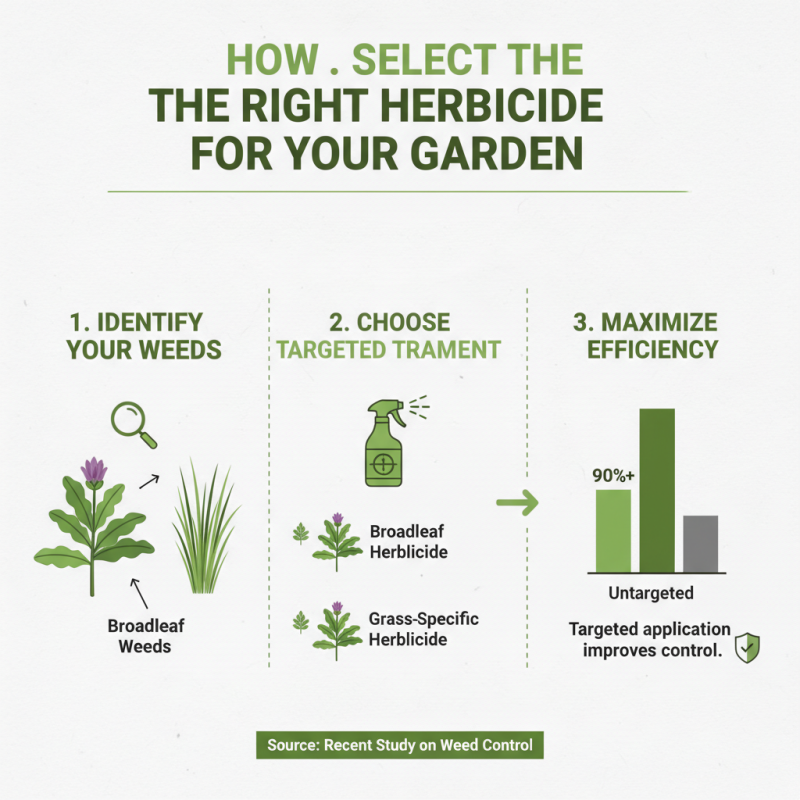
Selecting the right herbicide is crucial for effective weed control. Understanding the types of weeds in your garden can greatly influence your choice. For example, broadleaf weeds and grassy weeds require different treatment strategies. A recent study found that targeted herbicide application can improve weed control efficiency by up to 90% when used correctly.
Professional guidelines recommend performing a soil test before application. This helps identify the pH level and nutrient content of the soil. Some herbicides work better in specific soil conditions. Additionally, understanding the growth stages of weeds can optimize herbicide effectiveness. For instance, early-stage weeds are often more vulnerable to treatment.
Moreover, always read labels carefully. Look for information on active ingredients and application rates. Many gardeners overlook this step, leading to unintended damage to desirable plants. In fact, incorrect applications can reduce herbicide efficacy by 50%. A cautious approach is necessary, as improper use can harm not only your garden but also the local ecosystem. Knowledge and attention to detail are your best allies in successful gardening.
Application Techniques for Effective Weed Management
When managing weeds, applying chemical controls requires careful techniques. Begin by targeting specific weeds rather than general broadcasting. This focused approach minimizes the impact on beneficial plants. Spray at the right time, usually on a calm day. Wind can carry chemicals to unintended areas. Use a sprayer for even distribution, ensuring coverage is adequate but not excessive.
Precision is crucial. Always wear protective gear to prevent skin contact. It's also wise to test a small area first. This helps gauge the plant's response and ensures safety for surrounding flora. Monitor the weather and avoid spraying just before rain. This reduces runoff and enhances effectiveness.
Sometimes, mistakes happen. Over-application can lead to chemical buildup in the soil, affecting future plant growth. Regularly reassess your techniques and results. Adjust as necessary to find the right balance. Effective weed management should evolve based on experience and observation. If gravely concerned, consult with gardening experts for tailored advice.
Safety Precautions When Using Chemical Weeds Control Products
Chemical weed control products can significantly help in gardening. However, safety precautions are essential. Exposure to these chemicals can pose risks to humans, pets, and the environment. According to the Environmental Protection Agency (EPA), approximately 10% of all pesticide-related poisoning cases occur in residential areas.
Always wear protective gear when applying herbicides. Gloves, goggles, and masks can minimize skin and respiratory exposure. It's crucial to follow the manufacturer's instructions closely. Over-application or misuse can lead to environmental contamination. Additionally, studies indicate that improper handling of these substances increases the likelihood of adverse effects.
Consider the application timing. Applying chemicals during calm weather can reduce drift. Rainfall soon after application may wash away treatments, reducing effectiveness. Even with precautions, human error remains a risk, as noted in a report by the National Institute of Health. Awareness and careful planning can mitigate these dangers and support healthier gardening practices.
Top 10 Chemical Weed Control Methods for Effective Gardening Solutions
This chart illustrates the effectiveness ratings of the top 10 chemical weed control methods commonly used in gardening. The effectiveness is rated on a scale from 1 to 10, providing insights into which products can be more effective in managing unwanted weeds.