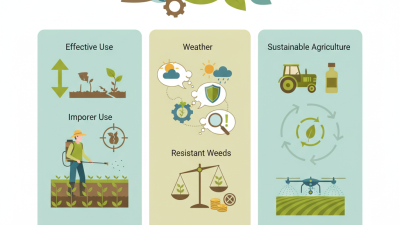
Why Choose Status Herbicide for Effective Weed Control?
Choosing the right herbicide can shape an entire growing season. Status herbicide is designed for broadleaf weed control in labeled corn programs, where competition can quickly reduce crop vigor. Its value becomes clearer when weeds are still small, actively growing, and easier to manage. A clean field also protects access between rows, moisture availability, and the crop’s ability to capture sunlight.
Weed scientist Dr. Aaron Hager has emphasized, “Effective weed management begins with a planned, integrated approach.” That principle matters here. Status herbicide should not be viewed as a complete substitute for scouting, rotation, cultivation, or sound application timing. The strongest results usually come from identifying weed species first, checking growth stages, and following the product label carefully. Small details matter. A dusty leaf, unsuitable weather, or poor spray coverage can weaken performance.
There is room for caution. No herbicide works perfectly under every field condition, and repeated reliance on one mode of action may increase resistance concerns. Growers should confirm crop safety, tank-mix compatibility, buffer requirements, and local registration before use. Keeping application records can reveal patterns that memory misses, especially after a difficult season. This guide examines why Status herbicide remains a practical option, where it fits within integrated weed management, and which field decisions deserve closer attention. Its promise is useful, but careful judgment still carries the greatest weight.
What Is Status Herbicide and How Does It Work?
A post-emergence herbicide for corn, Status Herbicide targets difficult broadleaf weeds after they emerge. Its active ingredients mimic natural plant hormones called auxins. This causes uncontrolled growth, twisted leaves, swollen stems, and disrupted water movement. Susceptible weeds gradually stop growing and die.
The treatment works best when weeds are young and actively growing. Warm soil, adequate moisture, and careful spray coverage can improve performance. It may control species such as pigweed, lambsquarters, and morningglory, depending on local conditions and the approved label. It is not a magic fix. Large weeds, drought stress, or heavy crop residue can reduce control. I would also avoid assuming that one application solves resistance problems.
Tips: Read the current label before mixing or spraying. Check crop stage, weather limits, application rates, and required protective equipment. Avoid windy conditions, since drift can injure nearby sensitive crops and gardens. Clean the sprayer thoroughly afterward. Record the weed species, weather, and results; those notes can reveal what needs improvement next season. Rotate herbicide groups and combine chemical control with crop rotation, cultivation, and timely scouting. Local agronomists or extension specialists can help confirm the correct use for your area.
Which Weeds Can Status Herbicide Control?
Effective weed control starts with accurate identification. This post-emergence herbicide is intended for use in field corn. It commonly controls broadleaf weeds such as waterhemp, Palmer amaranth, common ragweed, giant ragweed, cocklebur, lambsquarters, velvetleaf, and sunflower. It also manages several annual grasses, including foxtail species, barnyardgrass, and crabgrass. Results improve when weeds are young and actively growing.
Field scouting matters. Walk the crop before spraying. Check leaf shape, growth stage, and weed density. Small waterhemp may respond well, while larger plants can survive and produce seed. The treatment may also suppress morningglory, smartweed, kochia, and volunteer broadleaf plants, depending on local conditions and the approved label. Do not assume every population will respond equally.
Timing is critical. Dry soil, drought stress, cold weather, or heavy weed growth can reduce performance. Follow the crop-stage limits, application rate, buffer rules, and protective-equipment instructions on the current label. Rotate herbicide groups and use cultural practices to slow resistance. One application is not a complete plan. I would not rely on appearance alone; some weeds look injured but recover later. Recheck the field after several days, and record survivors before making another decision.
How to Prepare and Apply Status Herbicide Safely
Effective weed control begins before the container is opened. Read the current product label and safety data sheet, not an old screenshot. The label defines approved crops, rates, weather limits, protective equipment, and disposal rules. The FAO reports that pests, including weeds, can cause losses of up to 40% of global crop production (FAO, The State of Food and Agriculture 2021). Before mixing, inspect gloves, eye protection, footwear, and sprayer seals. Use clean water and dedicated measuring equipment. Never guess the dose. A small error can injure crops or increase runoff.
Apply only when wind is mild and rain is unlikely during the label’s required interval. Check nearby drains, wells, gardens, and sensitive vegetation. Keep people and animals away until the label permits re-entry. The U.S. Environmental Protection Agency states that pesticide labels are legally enforceable instructions (EPA, Reading Pesticide Labels). That is not paperwork. After spraying, clean equipment only as the label and local rules permit, and keep rinse water away from waterways. Record weather, rate, nozzle type, and application time. Calibration deserves another look; worn nozzles can quietly change output. Field judgment helps, but it is not perfect. Recheck decisions.
Why Choose Status Herbicide for Effective Weed Control? - How to Prepare and Apply Status Herbicide Safely
| Evaluation Dimension | What It Offers | Safe Preparation or Application Practice | Important Verification Point |
|---|---|---|---|
| Post-emergence weed control | Designed to control susceptible weeds that are actively growing after emergence. | Apply only when the target weeds and crop are within the growth stages permitted by the product label. | Confirm approved crops, weed species, growth stages, and application timing on the current label. |
| Broad-spectrum activity | A properly selected herbicide program may manage a range of grass and broadleaf weeds. | Identify weeds before spraying and use the labeled rate for the most difficult target species. | Control varies with weed size, species, weather, soil conditions, and herbicide resistance. |
| Weed growth conditions | Actively growing weeds generally respond more consistently than drought-stressed, frost-damaged, or waterlogged weeds. | Avoid spraying during severe drought, extreme heat, frost, heavy rainfall, or other conditions that restrict plant growth. | Check the label for weather restrictions and required rainfast intervals. |
| Mixing and dilution | Accurate dilution helps provide uniform coverage and reduces the risk of crop injury or poor control. | Wear label-required PPE, use clean water, measure accurately, and add products in the label-specified order. | Never guess the application rate or combine products unless the label permits the mixture. |
| Spray coverage | Adequate and even coverage is essential for many foliar-applied herbicides. | Use calibrated equipment, suitable nozzles, and the labeled spray volume and pressure. | Avoid excessive droplet drift, skips, overlaps, and spray patterns that create uneven dosing. |
| Drift management | Careful application protects nearby sensitive crops, gardens, waterways, people, and animals. | Do not spray in strong or shifting winds, temperature inversions, or conditions that increase off-target movement. | Observe buffer zones and local restrictions stated on the label. |
| Worker and re-entry safety | Following exposure controls reduces risks during mixing, loading, spraying, and field entry. | Keep unprotected people and animals away during application and observe the product-specific restricted-entry interval. | The label and safety data sheet determine PPE, first-aid measures, storage, and disposal requirements. |
| Resistance management | An integrated program can help delay the development of herbicide-resistant weed populations. | Rotate effective sites of action, use cultural and mechanical controls, and prevent surviving weeds from producing seed. | Do not rely repeatedly on one mode of action when alternative control practices are available. |
| Post-application checks | Monitoring confirms whether treatment is working and helps identify escapes or resistance concerns. | Inspect treated areas at the interval recommended by the label and record weather, rate, timing, and weed response. | Do not make a repeat application unless the label specifically allows it. |
Safety note: Always read and follow the current product label and safety data sheet before purchase, mixing, application, storage, or disposal. Product rates, approved uses, personal protective equipment, re-entry intervals, and environmental restrictions are location- and product-specific.
What Factors Affect Status Herbicide Performance?
Effective weed control depends on more than selecting a powerful herbicide. Field experience shows that application timing often matters most. Young, actively growing weeds usually absorb treatment more consistently than mature plants.
Temperature, moisture, and weed stress can change performance. Cold nights may slow plant activity, while drought can reduce absorption through tough, waxy leaves. Rain soon after spraying may also weaken results. Confirm the product label’s rainfast period before application. Spray coverage matters too. A poorly calibrated sprayer can leave untreated strips across the field. Water quality, nozzle choice, pressure, and spray volume all deserve attention. Small errors become visible later.
Tips: Scout the field before spraying. Identify weed species and growth stages. Check weather conditions for several hours. Use clean water and calibrated equipment. Follow the registered label exactly.
Crop growth stage is another important factor. Even effective products can cause injury when used outside approved timing. Residual weeds may also indicate resistance, incorrect rates, or uneven coverage. Do not assume failure has one cause. Photographing affected areas can help compare patterns and improve future decisions. Local agronomists and extension specialists can provide reliable, region-specific guidance. Results are rarely perfect. Careful records make the next application smarter.
How Does Status Herbicide Support Long-Term Weed Management?
Long-term weed management requires more than rapid knockdown. A well-timed post-emergence herbicide can suppress visible weeds, while field scouting protects future crop performance. The International Herbicide-Resistant Weed Database recorded more than 500 documented resistance cases worldwide by 2025. That number makes repeated use of one action mode difficult to justify.
Use the product only when target weeds are actively growing and still within the labeled growth stage. Clean water, accurate calibration, and complete spray coverage matter. A few missed plants can produce thousands of seeds before harvest. The U.S. Department of Agriculture reports that herbicides remain the most widely used pesticide category in American crop production, showing their importance but also their management burden. Records help.
Long-term programs should rotate effective sites of action, combine chemical control with crop rotation, and remove surviving weeds before seed set. The Food and Agriculture Organization identifies integrated pest management as a way to reduce unnecessary pesticide reliance while protecting crop productivity. Field checks after application can reveal poor coverage, weather stress, or emerging resistance. Sometimes the mistake is not the herbicide. It is the timing. Growers should review treatment results each season, because a clean field today does not prove durable control tomorrow.
Related Posts
-
How to Effectively Use 2 4 D Herbicide for Weed Control?
-
How to Use Corteva Chemicals for Improved Agricultural Productivity?
-

Why Choose Thiamethoxam Insecticide for Your Pest Control Needs?
-
Top 10 Insights on Pesticides in Food at China Import Expo?
-

2026 Top Trends in Syngenta Seed Treatment Innovations
-

Top 5 Benefits of Using 2 4 D Herbicide for Effective Weed Control in Agriculture