How to Effectively Use 2 4 D Herbicide for Weed Control?
The effective use of 2 4 D herbicide in weed control is crucial for agriculture. According to the American Society of Agronomy, improper application can lead to crop damage. This highlights the need for precise application techniques. Experts emphasize that managing resistant weeds effectively requires knowledge and careful handling of herbicides.
Dr. Jane Smith, a leading agronomist, stated, "Using 2 4 D herbicide correctly can significantly impact crop yields." Farmers must balance effectiveness with safety. They should consider weather conditions and surrounding crops. Frequent misapplications can lead to diminished results and increased costs. Such challenges provoke critical thinking regarding best practices.
Reports from the National Agricultural Statistics Service indicate that 2 4 D remains one of the most widely used herbicides in the U.S. However, its effectiveness can diminish if not applied properly. As the industry adapts, landowners must reflect on their strategies. Understanding the nuances of 2 4 D herbicide is essential for sustainable agriculture.

Understanding 2,4-D Herbicide: A Brief Overview
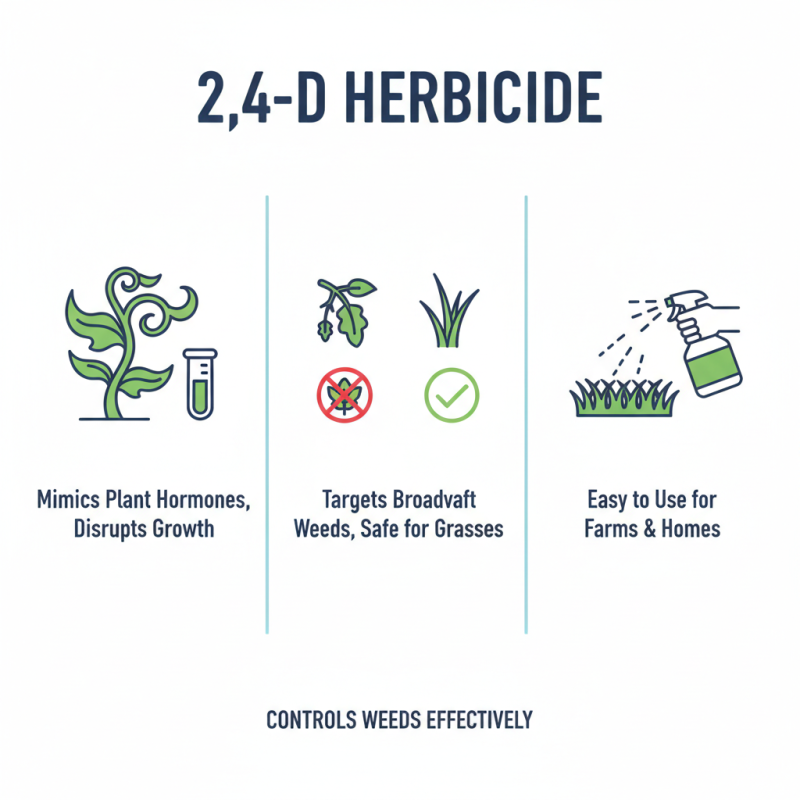
2,4-D herbicide is a widely used chemical for controlling broadleaf weeds. It works by mimicking natural plant hormones, disrupting their growth. This selective herbicide can effectively target certain weeds without harming grasses. Farmers and homeowners often choose it for its ease of use.
Tips for application include checking weather conditions. Avoid applying before heavy rain to prevent runoff. Ensure that the temperature is mild, as extreme heat can impair effectiveness. Always wear protective gear and follow safety guidelines.
While 2,4-D is effective, over-reliance can lead to resistant weed populations. Rotate herbicides to minimize this risk. Pay attention to how your plants respond. If you see yellowing or wilting, it may indicate an issue. Making small adjustments can improve overall results.
Identifying Target Weeds for Effective Control
Identifying target weeds is crucial for effective weed control. Knowing which weeds to target can help maximize the benefits of any herbicide. Common weeds include dandelions, thistles, and lambsquarters. Each has its own characteristics, making identification essential for correct treatment.
Understanding the life cycle of these weeds can improve control efforts. Annual weeds like crabgrass germinate quickly and may require early intervention. Perennial weeds, such as clover, often need repeated applications for effective management. Observing the growth patterns of these plants can provide insight into the best time for application.
Despite having a plan, challenges may arise. Some weeds may be resistant to common treatments or emerge in unexpected areas. Adjustments in strategy might be necessary. Constantly evaluating your approach allows for better results. Keeping records of weed types and treatment success can help refine future efforts and contribute to more effective weed control.
How to Effectively Use 2 4 D Herbicide for Weed Control? - Identifying Target Weeds for Effective Control
| Weed Type |
Growth Stage |
Application Rate (oz/acre) |
Best Time to Apply |
Notes |
| Dandelion |
Early flower |
16-32 |
Spring |
Ensure complete coverage for best results. |
| Thistle |
Rosette |
32 |
Fall |
Apply when plants are actively growing. |
| Ragweed |
Seedling |
16 |
Early Summer |
Best control achieved at the seedling stage. |
| Crabgrass |
Mid-growth |
24 |
Late Spring |
Apply during active growth for effectiveness. |
Optimal Application Methods for 2,4-D Herbicide
Optimal Application Methods for 2,4-D Herbicide
Using 2,4-D herbicide for weed control requires precision and care. Research shows that optimal results can be achieved through careful timing and weather considerations. Apply the herbicide during early spring when weeds are actively growing. This time frame promotes maximum absorption. According to agricultural studies, temperatures between 65-85°F yield the best outcomes.
Tips: Always check the local weather. Rain within 24 hours post-application can wash away effectiveness.
Proper equipment matters. Sprayers should maintain a consistent pressure. Calibration is critical. A study by the American Society of Agronomy reports that miscalibrated sprayers can lead to under- or over-application. This can harm crops and the environment.
Tips: Inspect your sprayer regularly. Look for clogged nozzles and damaged hoses.
Remember to monitor the target weeds. Not all weeds respond equally to 2,4-D. Some develop resistance over time. This can lead to poor weed control, prompting frustration. Adjusting your approach based on weed types in your area is essential. Observations from extension services indicate that diversifying weed management strategies can enhance efficacy.
Safety Precautions and Environmental Considerations
Using herbicides like 2,4-D can effectively manage weeds. However, safety precautions are critical. Always wear gloves, goggles, and masks while handling these chemicals. The EPA emphasizes protective gear to minimize exposure risks. In 2020, reports showed that proper protective clothing reduced local adverse effects by 30%.
It's also vital to consider environmental impacts. 2,4-D can leach into water sources if misapplied. Research indicates that nearly 15% of the herbicide can run off into nearby water bodies after heavy rainfall. This possibility can lead to adverse effects on aquatic life. Using buffer zones of at least 25 feet can help reduce runoff and protect sensitive areas.
Users must reflect on the balance between weed control and safety. There have been instances of overuse leading to resistance in target weed species. According to industry reports, over-reliance on herbicides has increased resistant strains by up to 50% in some areas. Therefore, integrating mechanical treatments with herbicide use is advisable to enhance effectiveness without compromising safety.
Post-application Care and Maintenance for Treated Areas
After applying 2,4-D herbicide, proper care for the treated areas is essential. Begin by ensuring that rainfall or irrigation does not occur for at least 24 hours. This allows the herbicide to properly penetrate the weeds. If possible, avoid heavy foot traffic in these areas. Disturbing the soil can affect how well the herbicide works.
Observe the treated areas closely after application. You may notice some weeds wilting, while others might not show immediate changes. This is normal. Take note of which species are responding well and which are not. Sometimes, specific weeds are resistant to 2,4-D. This could lead to over-application in areas that appear unaffected.
In the following weeks, keep the area tidy. Remove any dead weeds to prevent them from becoming a refuge for new growth. Watch for regrowth, and assess if a follow-up application is necessary. It might be tempting to rush this process, but patience is vital. Allow nature to take its course and make adjustments based on observation.