
China Best Fertilizer Granulation Equipment Supplier?
Choosing China’s best Fertilizer Granulation equipment supplier takes more than comparing prices or machine photographs. A granulator may look impressive on a factory floor, yet the real test comes when it handles your formulation, moisture range, and planned output. Small details matter. A wet granulation line, for example, depends on steady feeding, suitable mixing, and consistent drying. Poor coordination can leave uneven granules, excess fines, or a difficult cleaning job.
As an illustrative expert perspective—not a verified quotation from a named industry professional—process engineer Daniel Mercer puts the principle this way: “A reliable granulation line is proven by stable product quality, not by the machine’s nameplate capacity.” Buyers should ask suppliers for material-specific test results, sample granules, equipment specifications, and a clear explanation of commissioning and after-sales support. If a supplier cannot explain how it controls moisture or screens finished product, keep asking.
Fertilizer Granulation equipment should fit the process, not just the sales brochure. Compare drum, disc, and other granulation approaches against your raw materials and operating goals. Request references for installations with similar products, and check what spare parts are available. One point is easy to miss: a machine that performs well during a short demonstration may behave differently during continuous production. Ask for evidence, and leave room for doubt. The strongest supplier is usually the one willing to discuss limits, adjustment needs, and measurable performance—not promise perfect results.
What Fertilizer Granulation Equipment Does and How It Works
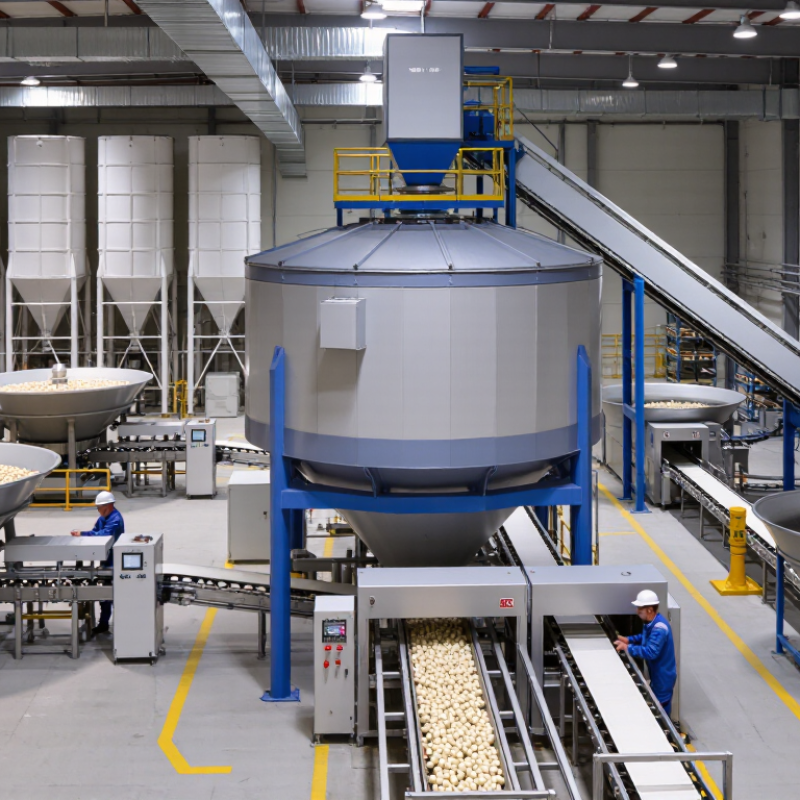
Fertilizer granulation equipment turns fine powders or slurry into larger, more uniform particles. A typical line may include a mixer, granulator, dryer, cooler, screen, and recycle conveyor. In a drum granulator, rotating material gathers around seed particles. A controlled spray of liquid binder helps layers build. In a pan granulator, the tilted, spinning disc rolls material into rounded granules. The right process depends on the recipe, moisture, and desired particle size. Not every feed behaves alike.
After forming, wet granules pass through a dryer, where heated air removes excess moisture. A cooler then reduces their temperature before screening separates saleable sizes from fines and oversized pieces. Both fractions can return to the process. This recycling helps limit waste, but it also makes stable feed and careful moisture control important. Operators check screen results, granule strength, and dryer temperatures; small changes can affect dust, storage, and spreading performance.
The scale is substantial. FAO’s World Fertilizer Trends and Outlook to 2022 projected global fertilizer consumption at 200.9 million tonnes of nutrients in 2022. That is a forecast, not a measurement of granulated product, but it shows why reliable processing matters. Equipment capacity alone is not enough. A line must suit the material and target output. One practical weakness is that laboratory trials may not fully predict behavior at plant scale, so commissioning data should guide adjustments.
What Fertilizer Granulation Equipment Does and How It Works
Granulators turn fine fertilizer materials into larger, more uniform particles. This chart shows indicative product-size ranges commonly targeted by different granulation methods; actual results depend on the material and process settings.
Main Types of Fertilizer Granulation Equipment
Fertilizer granulation equipment is selected by product recipe, moisture level, capacity, and the granule shape required. IFA’s 2024 Medium-Term Fertilizer Outlook projected global fertilizer consumption at about 205 million tonnes of nutrients in 2024/25. That was roughly 4% above the previous year. The figure signals a large market, but it does not tell a plant which granulator will perform best.
Rotary drum granulators suit continuous, higher-throughput wet processing, where tumbling helps particles grow into rounded granules.
Pan or disc granulators offer a visible, adjustable bed; operators can observe granule growth and change the angle or feed rate.
Roller press compactors form flakes or sheets under pressure, then rely on crushing and screening to reach the target size.
Extrusion granulators push conditioned material through openings, producing more uniform shapes.
Small batches behave differently. A machine that works well for one formulation may struggle with another.
Before choosing, check feed moisture, particle size, binder needs, throughput, and the amount of recycled fines. Wet granulation lines may also need dryers, coolers, and screens, so the granulator alone is not the whole investment. Test the actual blend when possible.
One practical detail is often underestimated: small changes in moisture can alter sticking, granule strength, and screen returns.
Published capacity figures are useful, but real output depends on the material and operating conditions. IFA’s report informs market context, not equipment performance; plant trials and process data are stronger evidence for a purchase.
Key Criteria for Evaluating Suppliers in China
When evaluating a fertilizer granulation equipment supplier in China, look beyond product photos and catalog specifications. Ask how the machine handles your actual raw materials, moisture range, and target pellet size. A supplier with relevant project experience should explain its process clearly, not just promise high output. Request test data or a live trial using a representative sample.
Inspect the granulator, feeder, and dryer as a connected production line. Ask what parts contact abrasive material and how easily wear components can be replaced. Small details matter. Check whether the quoted capacity reflects continuous operation or a short test run. Compare equipment dimensions, motor power, and energy use against your site conditions; a low price may exclude installation support or essential controls.
Reliable suppliers provide clear drawings, operating manuals, spare-parts lists, and realistic delivery schedules. Ask to speak with customers who process similar materials, while respecting their privacy. Clarify how remote troubleshooting works and which issues require an on-site visit. If answers change between sales and technical staff, pause and ask for written confirmation. I would not treat one impressive factory tour as proof of consistent quality; production records and agreed acceptance tests matter more. Define those tests before paying a deposit.
How to Compare Equipment Quality, Capacity, and Support
Choosing a fertilizer granulation equipment supplier in China takes more than comparing quoted prices. Begin with the material you actually process: its moisture, particle size, and formulation can change machine performance. Ask suppliers to run a test using a representative sample. One polished demonstration is not enough.
Check construction details, not just photographs. Review welds, material thickness, wear-part access, and the quality of the control cabinet. Request inspection records and a clear list of included components. Capacity figures need context. Ask whether they refer to steady production or a brief test, and confirm the expected output for your specific material. Small differences matter.
Support is part of equipment quality. Clarify who handles installation, operator training, and commissioning, and whether spare parts are readily available. Ask for realistic response times and written maintenance instructions. A supplier may promise fast assistance, but a named contact and documented service process are more useful. I would not treat one successful trial as proof of long-term reliability; operating conditions change, and that uncertainty deserves honest discussion.
China Best Fertilizer Granulation Equipment Supplier? - How to Compare Equipment Quality, Capacity, and Support
| Comparison Dimension | What to Compare | Evidence to Request | Practical Evaluation |
|---|---|---|---|
| Effective production capacity | Guaranteed output in tonnes per hour for the specified raw materials, product size, and operating conditions—not just the machine’s maximum or nominal rating. | A written capacity guarantee and a test-run report that records feed rate, operating time, finished-product output, and rejected or recycled material. | Compare offers using the same feed composition and product specification. Ask whether the quoted figure is fresh-feed capacity or saleable finished-product output. |
| Granule size and consistency | The requested particle-size range, percentage of product within that range, fines, oversize material, and recycle requirements. A 2–5 mm size range is commonly specified for granular fertilizer, but the required range depends on the product and market. | Sieve-analysis results from a representative production trial, with the sieve sizes and sampling method stated. | Check the actual size distribution rather than relying on a sample photograph or a single “average size” figure. |
| Granulation process fit | Whether the proposed process—such as pan, rotary drum, or extrusion granulation—suits the material’s formulation, moisture behavior, and desired granule properties. | A process description, a list of required upstream and downstream equipment, and trial results using the buyer’s own material or a representative sample. | Do not compare granulator types by name alone; confirm that the complete process can meet the product specification. |
| Granule strength and durability | Resistance to breakage during conveying, screening, storage, and transport, measured against the buyer’s product requirements. | Test results with the test method, sample condition, and test units identified; where relevant, request data after drying and cooling. | Use the same test method and conditioning procedure when comparing results from different suppliers. |
| Material compatibility and wear parts | Contact materials, liner or die construction, corrosion protection, and replaceable components suited to the feed’s chemical and abrasive properties. | A materials list, component drawings, wear-part specifications, and recommended inspection or replacement intervals. | Confirm suitability for the actual formulation; request written clarification for corrosive, abrasive, or moisture-sensitive feeds. |
| Energy and utility requirements | Installed motor power, operating power where available, electrical supply, and any process-water, steam, compressed-air, or fuel requirements. | A utility-load list and, where offered, measured consumption per tonne under a stated test condition. | Compare the whole production line, not only the granulator motor rating, and verify compatibility with the site’s electrical supply. |
| Construction and quality control | Fabrication tolerances, weld inspection, alignment, balancing of rotating parts, electrical components, and documented assembly checks. | Inspection and test records, drawings, component specifications, and a factory acceptance test plan agreed before shipment. | Check that acceptance criteria are specific, measurable, and included in the purchase contract. |
| Installation and commissioning | Scope of installation guidance, commissioning support, operator training, and responsibility for connecting the equipment to the rest of the line. | A written scope stating what is included, who provides the work, expected schedule, and any travel or service costs. | Clarify responsibilities before ordering, especially for integrated lines and overseas projects. |
| Spare parts and after-sales support | Availability of critical wear parts, technical documentation, service channels, and agreed response times. | A recommended spare-parts list with part numbers, prices, lead times, warranty terms, and support commitments stated in writing. | Evaluate support against the operating schedule and the distance between the plant and service locations. |
| Total project cost | Equipment price plus auxiliaries, controls, freight, installation, commissioning, spare parts, and expected operating costs. | An itemized quotation with exclusions, delivery terms, payment milestones, warranty conditions, and optional equipment clearly identified. | Compare equivalent scopes and specifications; the lowest equipment-only quotation may not represent the lowest project cost. |
Note: Capacity, granule quality, power use, and service terms depend on the material, process design, operating conditions, and contract scope. Confirm all performance figures with a documented test using representative feed material.
Steps for Selecting a Suitable Chinese Supplier
China Best Fertilizer Granulation Equipment Supplier?
Steps for Selecting a Suitable Chinese Supplier
Choosing a supplier starts with your material, not a catalogue. Share feedstock details, target granule size, moisture range, and expected hourly output. FAO’s World Fertilizer Trends and Outlook to 2026 projected global fertilizer nutrient demand at 208.4 million tonnes in 2026. That figure signals a large market, but it cannot tell you whether a particular production line will suit your raw materials.
Ask suppliers to explain the full process flow, including mixing, granulation, drying, screening, and recycle. Request test results using feedstock close to yours. Check throughput alongside granule-size distribution, moisture, dust levels, and energy use. A neat brochure is not enough. Ask for itemised quotations, equipment drawings, installation requirements, spare-parts lists, and realistic delivery schedules. Then speak with operating customers about maintenance and parts availability, not only commissioning.
Set written acceptance criteria before ordering. Clarify what happens if a factory test misses the agreed capacity or product specifications. Compare technical support and training plans, too; remote troubleshooting can be difficult when process conditions vary. A supplier may have strong machinery but limited experience with your material. That matters. Treat references and test data as evidence, not guarantees, and revisit assumptions before committing.
