10 Best Practices for Using Pesticides in Agriculture?
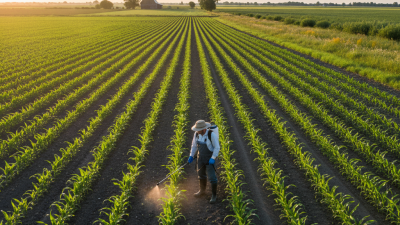
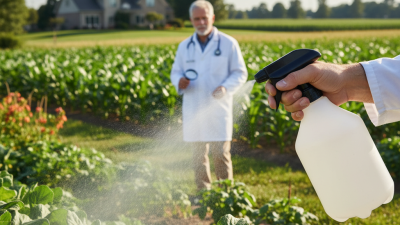
In the agricultural industry, the careful use of pesticides is essential for effective crop management. Dr. Emily Carter, a leading expert in sustainable agriculture, states, "Pesticides in agriculture must be applied responsibly to ensure both productivity and environmental health." Her insight emphasizes the delicate balance between maximizing yield and minimizing harm.
Farmers face numerous challenges. They must control pests while protecting beneficial insects. Proper pesticide usage can enhance crop resilience. However, misuse can lead to resistance and environmental damage. This dual potential demands a focused strategy on best practices.
Mistakes in pesticide application happen frequently. Many farmers lack adequate training or resources. This can lead to over-application or improper timing. Reflecting on these issues is vital. By embracing best practices, the agricultural community can foster a safer, more sustainable approach to using pesticides in agriculture. The goal is to safeguard both crops and ecosystems.
Importance of Integrated Pest Management in Agriculture
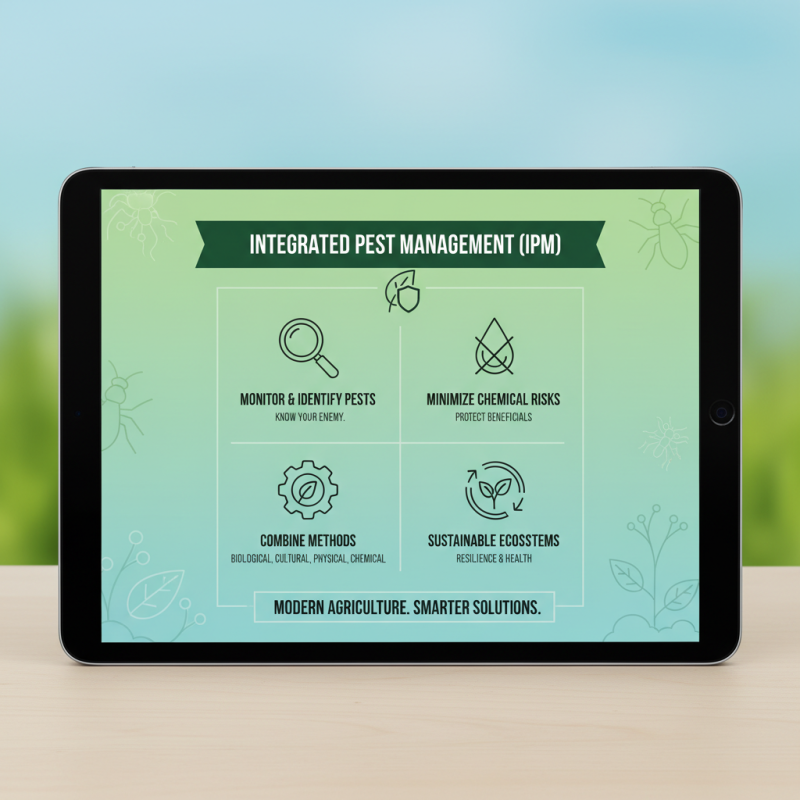
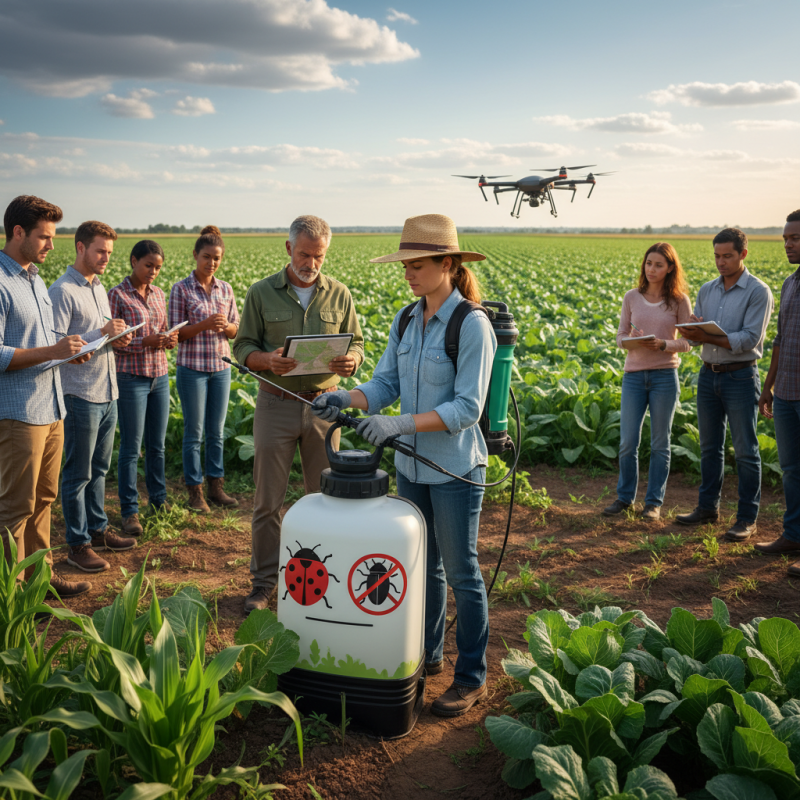
Integrated Pest Management (IPM) is essential for modern agriculture. It combines various methods to control pests while minimizing risks. Farmers often rely on pesticides, but these can harm beneficial organisms. Over-reliance on chemicals leads to resistance. Moreover, it can disrupt ecosystems.
IPM emphasizes understanding pest biology and behavior. By monitoring pest populations, farmers can make informed decisions. They can apply pesticides only when necessary. This reduces chemical use and protects pollinators. Crop rotation is another tool. By changing plant types, farmers can break pest cycles.
Yet, implementing IPM is not without challenges. Farmers may hesitate to adopt new practices. Education and training are critical. Some methods may seem less effective initially. A gradual approach can ease the transition. With reflection, farmers can find the right balance. This will ensure sustainable farming for the future.
Understanding Pesticide Types and Their Application Methods
Understanding the various types of pesticides and their application methods is crucial for effective agricultural practices. Chemical pesticides can be divided into categories such as herbicides, insecticides, and fungicides. Each type targets specific pests or issues. For example, herbicides control unwanted plants, improving crop yields. On the other hand, insecticides are used to fend off pests that harm crops, ensuring healthy produce. Fungicides help protect against fungal infections that can devastate crops.
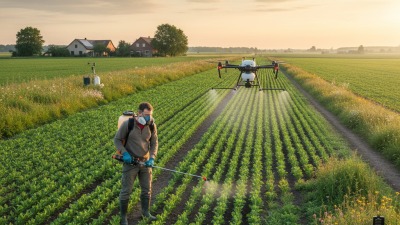
When applying pesticides, timing and method matter greatly. Spraying during calm weather minimizes drift. This helps the pesticide stay where it’s needed most. Using personal protective gear is also essential for safety. It’s important to read labels for dosage and application timelines. Mismatching these details can lead to ineffective treatment or, worse, crop damage.
Tips: Consider integrating integrated pest management (IPM) practices. This incorporates biological control methods with chemical applications for better environmental health. Additionally, regularly inspect your crops for early signs of pest problems. The sooner you detect issues, the less pesticide you may need. Lastly, always reflect on your application methods. Are they efficient? Could there be less impact on beneficial insects? These questions are vital for sustainable farming.
Strategies for Minimizing Pesticide Resistance in Crop Protection
Pesticide resistance poses a significant threat to crop protection. One major strategy to reduce resistance is to implement crop rotation. By rotating different crops, pests cannot easily adapt to a single pesticide. This approach limits their exposure to those chemicals. As a result, pest populations can remain manageable without relying solely on pesticides.
Another effective practice involves mixing different pesticide modes of action. This method disrupts the development of resistant strains. However, applying multiple pesticides can be challenging. Farmers must carefully monitor their effectiveness and environmental impact. Misusing or overapplying pesticides can harm beneficial insects and lead to resistance.
Integrating biological control is also a valid approach. It encourages the presence of natural predators and parasites. Yet, it may require more time and effort than chemical applications. Some farmers may find it difficult to fully embrace this method. Education and awareness about pest life cycles can foster better decision-making. It is essential to strike a balance between pesticide use and sustainable practices.
Safe Handling and Application Procedures for Pesticides
Safe handling and application of pesticides in agriculture are crucial for protecting both human health and the environment. Always wear protective gear, such as gloves and masks, when handling these chemicals. Familiarize yourself with the specific requirements for personal protective equipment (PPE) as outlined on labels. This minimizes exposure and reduces risks.
Proper storage of pesticides is equally important. Keep them in a cool, locked area, away from children and pets. Avoid mixing different products unless specified by their labels. Many farmworkers lack proper training in pesticide application. Regular education on safe practices can enhance overall safety. It's vital to read labels carefully before use.
Applying pesticides in calm weather helps reduce drift and ensures better coverage. Take note of wind patterns and avoid spraying on windy days. Also, be mindful of nearby crops and water sources. Mistakes can happen. Reflect on past applications and learn from any challenges faced. Continuous improvement is key to effective pesticide use while ensuring safety.
10 Best Practices for Using Pesticides in Agriculture
Environmental Considerations and Mitigation Techniques for Pesticide Use
Pesticides play a crucial role in agriculture, but their use requires careful consideration of environmental impacts. The Environmental Protection Agency (EPA) states that approximately 70% of pesticides can reach non-target areas, affecting soil and water quality. Farmers must implement strategies to mitigate these risks.
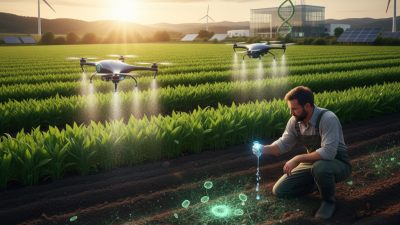
One effective method is precision agriculture. This technology allows farmers to apply pesticides only where needed, reducing overall usage. Studies show that precision application can cut pesticide use by up to 40%. This not only lowers costs but also minimizes environmental harm.
Tip: Regularly monitor weather conditions before pesticide application. Rain can wash pesticides into waterways, leading to contamination.
Another approach is integrated pest management (IPM). IPM combines biological, cultural, and chemical practices to manage pests sustainably. The World Health Organization highlights IPM as a safer alternative, reducing reliance on chemical pesticides. However, transitioning to IPM can be challenging. Farmers must be willing to adapt their practices over time.
Tip: Rotate crop types each season to disrupt pest life cycles and reduce pesticide dependence.
It's vital to recognize the balance between productivity and environmental health. Ongoing education and research into sustainable practices are essential for responsible pesticide use.