Is Ammonium Aluminum Sulfate the Best Choice for Your Needs?
Ammonium Aluminum Sulfate, commonly known as ammonium alum, is a versatile compound widely used across various industries. According to a report by the Global Market Insights, the demand for ammonium aluminum sulfate in water treatment and food processing industries is growing steadily. This compound plays a significant role in clarifying water, helping to improve its safety and quality.
In agriculture, ammonium aluminum sulfate is crucial as an acidic soil amendment. It enhances nutrient availability for plants, leading to better yield. A study published in the Journal of Agricultural Science highlights its effectiveness in increasing crop production by up to 20%. However, choosing the right product can be challenging.
There are many options available. Quality varies significantly among suppliers. Not all ammonium aluminum sulfate products meet the same standards. Some may contain impurities, affecting their efficacy. It is essential to evaluate suppliers carefully and consider your specific needs. Are you prioritizing purity or cost-efficiency? The decision to use ammonium aluminum sulfate should be informed by thorough research and industry insights.
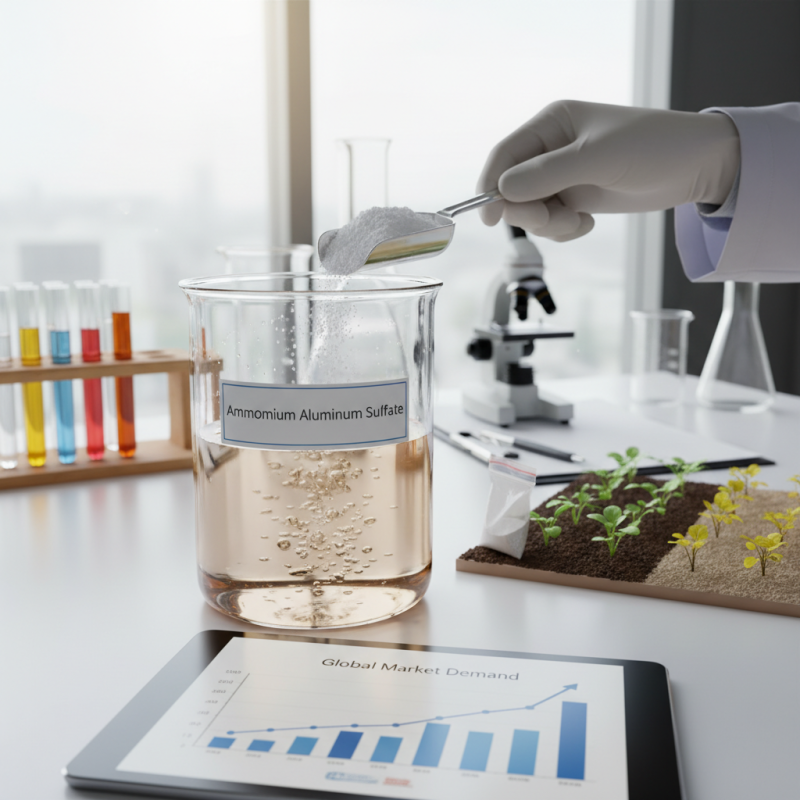
Understanding Ammonium Aluminum Sulfate: Composition and Properties
Ammonium aluminum sulfate, also known as alum, has unique properties that make it valuable in various fields. This compound consists of ammonium, aluminum, and sulfate ions. Its chemical formula is KAl(SO₄)₂·12H₂O. This crystal structure grants it hydrophilic qualities. Such properties enable its use in water treatment and paper manufacturing. Industry reports indicate that over 50% of alum produced globally is utilized in water purification processes.
The solubility of ammonium aluminum sulfate in water is significant. Most sources suggest it dissolves at around 27g per liter at room temperature. This makes it effective in coagulating impurities. However, while it effectively removes particulates, it can lead to increased aluminum levels in treated water. Some studies raise concerns about long-term exposure to aluminum for ecosystem health. These are important considerations for industries relying on this chemical.
When considering ammonium aluminum sulfate, it's crucial to weigh its benefits and potential drawbacks. Although it is effective in various applications, you should assess your specific needs. The environmental impact and safety must be part of your decision-making process. Understanding both its composition and properties can lead to better choices for applications in water treatment, food processing, and agriculture.
Applications of Ammonium Aluminum Sulfate in Agriculture and Industry
Ammonium aluminum sulfate, often known as alum, plays a crucial role in both agriculture and industry. In agriculture, it is primarily used as an effective soil amendment. By regulating soil pH, it improves nutrient availability. This leads to healthier crops and improved yields. Many farmers have found success using it to enhance their soil health.
In industrial applications, ammonium aluminum sulfate serves various functions. It is commonly utilized in water treatment processes to clarify drinking water. It works by coagulating impurities, making them easier to remove. Additionally, it is employed in the paper industry as a sizing agent. This enhances the quality of paper products. Despite its benefits, some users report challenges with dosages and effectiveness. Finding the right balance can be tricky, and improper use may lead to negative outcomes.
The versatility of ammonium aluminum sulfate makes it appealing. Yet, it's vital for users to understand their specific needs. Proper application and knowledge of this compound are essential for achieving optimal results. Recognizing the limitations will help in making informed decisions.
Assessing the Efficacy of Ammonium Aluminum Sulfate in Water Treatment
Ammonium aluminum sulfate, often referred to as alum, is widely used in water treatment. Its efficacy comes from its ability to act as a coagulant, helping to remove suspended particles. According to a study by the American Water Works Association, alum can enhance the removal of turbidity by up to 90% when used properly. This makes it a reliable option for many treatment plants.
However, there are concerns regarding the long-term effects of using aluminum-based coagulants. Some studies suggest that excessive aluminum exposure could be linked to health risks. The World Health Organization has set guidelines indicating that the safe level of aluminum in drinking water should not exceed 0.2 mg/L. Therefore, operators must monitor alum dosage closely.
Tips: Always conduct jar tests before large-scale application. This helps determine the optimal dosage for specific water conditions. Regularly assess the aluminum concentration in treated water to ensure compliance with health standards. Continuous evaluation can prevent unforeseen issues related to aluminum residues.
Is Ammonium Aluminum Sulfate the Best Choice for Your Needs? - Assessing the Efficacy of Ammonium Aluminum Sulfate in Water Treatment
| Parameter | Value | Units | Significance |
| pH Level | 6.5 - 7.5 | pH | Optimal range for aluminum sulfate effectiveness |
| Aluminum Content | 6% - 8% | w/w | Indicates concentration of active ingredient |
| Solubility | > 50 g/L | g/L | High solubility promotes effective usage |
| Flocculation Efficiency | 85% - 95% | Percentage | Efficiency in removing suspended particles |
| Cost per kg | $0.50 - $1.00 | USD | Economic feasibility for water treatment facilities |
Comparative Analysis: Ammonium Aluminum Sulfate vs. Alternative Flocculants
When considering flocculants for water treatment, ammonium aluminum sulfate is a common option. However, it is essential to compare it with alternatives like polyacrylamides and natural coagulants. Each flocculant has unique properties, impacting efficiency and application. Understanding water chemistry is crucial before making a selection.
One key factor is the removal efficiency. Ammonium aluminum sulfate can be effective for turbidity reduction. Yet, natural coagulants may be a better fit for eco-friendly applications. They can reduce the need for additional chemicals. Evaluating the specific needs of your water treatment process can lead to a better choice.
Tips: Always test different flocculants in small batches. Monitor changes in water quality carefully. Consider the environmental impact of your choice, as some options may have eco-friendlier profiles. Assess cost versus effectiveness, as budget constraints can limit options. Ultimately, the best choice depends on your specific requirements and conditions.
Health and Safety Considerations When Using Ammonium Aluminum Sulfate
Ammonium aluminum sulfate, often used in various applications, demands attention regarding health and safety. According to a report by the Agency for Toxic Substances and Disease Registry (ATSDR), this compound can cause skin and eye irritation upon contact. It is essential for users to wear appropriate protective gear when handling the substance.
The World Health Organization (WHO) has outlined potential risks associated with exposure. Prolonged inhalation of dust can lead to respiratory issues. It’s not only the immediate effects that need consideration; long-term exposure may pose health risks, particularly for sensitive groups. Environmental data show that this chemical can accumulate in soil, raising concerns for agricultural use.
Safety data sheets highlight first aid measures and the importance of proper ventilation when using ammonium aluminum sulfate. Many users may overlook these precautions, leading to unintentional exposure. Self-awareness and adherence to safety guidelines are crucial. Users must reflect on their practices to ensure that they are taking the necessary steps to mitigate risks effectively.