
2026 Best Leaf Extraction Equipment for Buyers?
Choosing the right Leaf Extraction equipment starts with the material, not the machine’s headline capacity. Fresh leaves can carry substantial moisture; dried leaves may be brittle and dusty. Those differences affect feed consistency, extraction time, filtration, and cleaning. A unit that performs well with one crop may produce uneven results with another. Small trials matter.
Market context helps, but it needs careful interpretation. Grand View Research’s Botanical Extracts Market Size report estimated the global botanical extracts market at about $6.9 billion in 2023 and projected a 9.1% compound annual growth rate from 2024 to 2030. That figure describes the extracts market, not equipment sales. Still, it signals why buyers should examine throughput, energy use, material compatibility, and service support before investing. Numbers can mislead.
This 2026 guide compares equipment types and practical buying criteria, including batch size, temperature control, cleaning access, and the quality of technical documentation. Buyers should request test data using their own leaf material, then check whether quoted capacity reflects real operating conditions. A polished brochure is not proof. Ask about spare parts, operator training, and maintenance intervals, too. Those details are easy to overlook. Not every supplier provides clear answers, and that is a reason to pause, not guess.
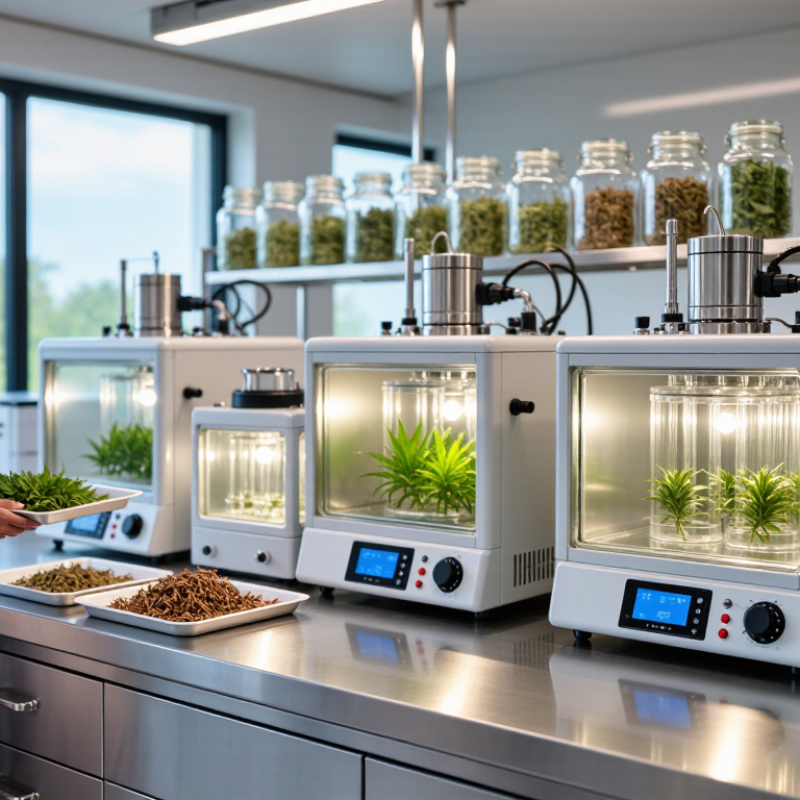
Understanding Leaf Extraction Equipment and Its Core Functions
Leaf extraction equipment separates useful, soluble components from prepared leaves while limiting unwanted plant material. A typical system may include a material vessel, mixing or circulation components, a filter, and temperature controls. Some setups also recover and reuse compatible processing liquids. The exact configuration depends on the leaf type, intended application, and production scale.
The process starts with clean, evenly prepared leaves. Consistent particle size helps liquid reach the material more evenly, though overly fine material can clog filters. Inside the vessel, controlled contact time and gentle agitation encourage extraction. Heat is not always better; excessive temperatures may damage delicate components. Small details matter.
After extraction, filtration removes solids, and downstream equipment may concentrate or dry the liquid. Operators should check seals, filter condition, temperature readings, and cleaning records between batches. These checks help reduce cross-contamination and make results more repeatable. They do not guarantee identical outcomes: leaf moisture and harvest variation can still affect yield. A pilot run is useful before committing to larger equipment, and process settings should suit the intended food, cosmetic, or other permitted application.
| Equipment type | Core function and principle | Suitable target / material | Typical operating conditions | Key buyer considerations |
|---|---|---|---|---|
| Agitated solvent extraction tank | Mixes leaves with a liquid solvent to transfer soluble compounds into the liquid phase; commonly paired with filtration and solvent recovery. | Water- or ethanol-soluble plant constituents; fresh or dried, size-reduced leaves. | Often operated near atmospheric pressure; temperature and extraction time depend on the solvent, target, and heat sensitivity. | Check vessel volume, agitation, temperature control, drainage, filtration, solvent compatibility, and cleanability. |
| Closed-loop ethanol extraction system | Contacts plant material with ethanol and recovers solvent for reuse, typically through evaporation or distillation stages. | A broad range of ethanol-soluble compounds from dried or fresh leaves, depending on process design. | Extraction may be conducted at ambient or controlled temperatures; solvent recovery uses heating and condensation under the system’s designed conditions. | Assess solvent recovery rate, explosion protection, ventilation, grounding, seals, automation, and applicable local safety codes. |
| Supercritical CO₂ extractor | Uses carbon dioxide above its critical point as a tunable solvent; pressure and temperature influence solvating power. A separator helps collect extracted material. | Non-polar and moderately non-polar compounds, including some volatile oils and lipophilic constituents; polar targets may require a co-solvent. | Common process ranges are roughly 100–400 bar and 35–80°C, with settings selected for the material and desired fraction. | Review pressure-vessel certification, working volume, CO₂ flow and recovery, separator configuration, and operator training needs. |
| Steam distillation unit | Passes steam through plant material; volatile compounds travel with the vapor, then condense for separation from water. | Volatile essential oils and other steam-distillable aromatic compounds in leaves. | Typically uses steam near its boiling point at the operating pressure; atmospheric systems operate around 100°C at sea level. | Check boiler capacity, steam distribution, condenser duty, oil-water separation, and heat-sensitive material limitations. |
| Ultrasound-assisted extraction system | Uses acoustic cavitation to improve solvent contact and mass transfer; commonly integrated with a solvent tank and temperature control. | Solvent-extractable compounds from leaves where faster extraction or improved mass transfer is desired. | Common ultrasonic frequencies are approximately 20–40 kHz; temperature and treatment time are process-specific. | Compare probe or bath configuration, usable volume, acoustic power, temperature rise, and scale-up performance. |
| Filtration and solvent-recovery equipment | Separates spent plant solids from extract and can concentrate the liquid by recovering volatile solvent through evaporation and condensation. | Downstream processing for liquid extracts produced by solvent-based methods. | Filtration may use gravity, pressure, or vacuum; solvent recovery may use atmospheric or reduced-pressure evaporation. | Size equipment for batch volume and viscosity; verify materials compatibility, condenser capacity, residual-solvent targets, and safety controls. |
Common Equipment Types and the Extraction Methods They Use
Leaf extraction equipment is best compared by the method it supports, not by capacity alone. Grand View Research estimated the global botanical extracts market at about US$6.2 billion in 2023, with projected annual growth of 8.1% through 2030. That demand makes repeatable processing important, but the market figure does not tell buyers which machine fits their leaves.
Jacketed tanks and filter presses commonly support hot-water extraction. Warm water circulates through chopped leaves, then screens or filter cloth separate the liquid from plant solids. Agitated tanks can handle food-grade water-and-alcohol mixtures, while recovery equipment helps reclaim the liquid after extraction. Supercritical carbon dioxide systems use high-pressure vessels and offer a different way to separate selected compounds. They also need specialized controls and higher capital investment.
The details matter. Damp leaves can clump, while finely cut material may slow filtration. A small pilot batch can reveal these issues before a full line is specified. Still, pilot results may not scale perfectly. Buyers should compare temperature control, vessel volume, filtration area, cleanability, and documented food-contact materials. The best choice depends on the leaf, target extract, and production scale—not a single “best” method.
How Leaf Type and Production Scale Shape Equipment Needs
Leaf type changes equipment needs more than a headline capacity number suggests. Thin, brittle leaves may produce dust and feed unevenly, while tough, fibrous leaves can bridge in hoppers or leave coarse material behind. High-moisture leaves also behave differently from fully dried ones. Before choosing a system, record leaf size, moisture, and expected variation between batches. Check whether the machine can handle those conditions without excessive heat or clogging. Small details matter.
Production scale shapes the rest of the decision. A small operation may benefit from a batch unit that is easy to clean and adjust. Larger output may call for steady feeding, temperature monitoring, and simple access to wear parts. Compare rated capacity with realistic operating time, not just ideal conditions. Ask for a trial using your own leaf material; samples can reveal problems that a specification sheet misses. It is easy to overestimate future demand, too, so leave room to scale without buying far beyond current needs.
Tips: Bring a representative leaf sample and ask how preparation changes performance. Check cleaning time, screen options, and maintenance access. If the supplier cannot explain the test conditions, pause and ask for clearer data.
2026 Best Leaf Extraction Equipment for Buyers: How Leaf Type and Production Scale Shape Equipment Needs
Typical moisture ranges in freshly harvested leaves. Higher moisture can increase the amount of material handled per unit of dry product, so use feedstock testing alongside your target production scale when sizing equipment.
Ranges are indicative planning values; cultivar, growing conditions, and time after harvest affect actual moisture. Pilot buyers can start with small-batch equipment, while larger operations should size feeding, extraction, and drying capacity to measured seasonal volumes.
Key Factors for Comparing Equipment Performance and Safety
Compare botanical leaf-extraction systems using the same feedstock, moisture level, cut size, and batch mass; otherwise, yield claims are not comparable. Record kilograms processed per hour, extract yield per kilogram of dry leaf, residual moisture, and cleaning time. Ask for repeat runs, not a showcase batch. Small differences matter. Check whether sensors measure temperature and pressure in the product, not only at the vessel wall. That detail can reveal uneven heating and inconsistent batches. Yield alone can mislead: a faster cycle may leave more material behind or require extra cleaning.
Safety deserves equal weight. Inspect guards, interlocked lids, emergency stops, dust capture, and procedures for hot surfaces and pressurized lines. OSHA’s Combustible Dust National Emphasis Program documented 281 dust fires and explosions, 119 deaths, and 718 injuries across U.S. industries from 1980 to 2005. Fine, dry leaf dust calls for a site-specific hazard review. NIOSH recommends limiting occupational noise exposure to 85 dBA over eight hours, using a 3-dB exchange rate (Criteria for a Recommended Standard: Occupational Noise Exposure, 1998). Measure sound beside the operator during a full cycle. A machine may perform well in a demonstration yet prove awkward to sanitize. Check access, drainage, and whether maintenance requires reaching near moving parts.
A Practical Framework for Evaluating 2026 Equipment Options
2026 Best Leaf Extraction Equipment for Buyers?
A Practical Framework for Evaluating 2026 Equipment Options
Choosing leaf extraction equipment starts with the material, not the brochure. Record leaf moisture, particle size, and batch weight before comparing machines. Ask suppliers to test the same prepared material under documented conditions. Measure throughput, extraction yield, product temperature, and cleaning time. Small details matter: a clogged screen or awkward drain can slow an entire shift.
Energy use deserves a place in the comparison. The International Energy Agency’s Energy Efficiency 2023 report says industry accounts for about 37% of global energy consumption. The U.S. Department of Energy’s 2022 Industrial Decarbonization Roadmap estimates process heating uses roughly half of U.S. manufacturing energy. These figures are broad, not extractor-specific, but they support checking power and heat demand per kilogram processed. Ask for operating data, not just motor ratings.
Run a wet-day test. Check seals, guards, access panels, and how quickly operators can clean contact surfaces. Request maintenance intervals and spare-part lead times in writing. Compare total operating costs alongside purchase price, including water, power, labor, and downtime. One awkward truth: the “best” machine may look less impressive on paper. A short, repeatable trial often reveals more than a polished demonstration.
