Top 10 Benefits of Lambda Cyhalothrin for Pest Control and Agriculture
In the ever-evolving landscape of agricultural practices and pest management, lambda cyhalothrin has emerged as an essential tool for farmers worldwide. This synthetic pyrethroid insecticide is known for its high effectiveness against a wide range of agricultural pests, contributing significantly to crop protection and enhancing overall yield. According to the Food and Agriculture Organization (FAO), effective pest management is critical, as it is estimated that pests can cause losses of up to 30% of potential crop yields globally. By utilizing lambda cyhalothrin, farmers can combat these challenges head-on, thereby safeguarding their harvests.
Moreover, lambda cyhalothrin offers multiple benefits, not just in terms of pest control but also regarding environmental sustainability and safety. Reports from the Environmental Protection Agency (EPA) indicate that when used according to label directions, lambda cyhalothrin poses minimal risk to non-target organisms and has a favorable environmental profile compared to older insecticides. As agricultural practices pivot towards more environmentally friendly solutions, the strategic use of lambda cyhalothrin holds the potential to revolutionize pest control methods, contributing to sustainable agriculture practices and food security. This article delves into the top ten benefits of lambda cyhalothrin, underscoring its pivotal role in modern agriculture.

Understanding Lambda Cyhalothrin: An Overview
Lambda cyhalothrin is a synthetic pyrethroid insecticide widely used in pest control and agriculture. This chemical compound works by targeting the nervous system of insects, effectively disrupting their normal functioning. Its rapid action makes it a favored choice among farmers looking to protect their crops from a variety of pests including aphids, beetles, and caterpillars. Understanding its mechanism provides insight into its efficacy and safety profile in agricultural applications.
One of the key attributes of lambda cyhalothrin is its versatility. It can be employed on a wide range of crops, ensuring that various agricultural sectors can benefit from its use. Additionally, because it breaks down relatively quickly in the environment, it reduces the risk of long-term ecological impact. This stability, alongside its selective action, allows beneficial insects to thrive while effectively controlling harmful populations. Overall, lambda cyhalothrin represents an essential tool in integrated pest management strategies, offering enhanced productivity and sustainable agricultural practices.
Key Mechanisms of Action in Pest Control
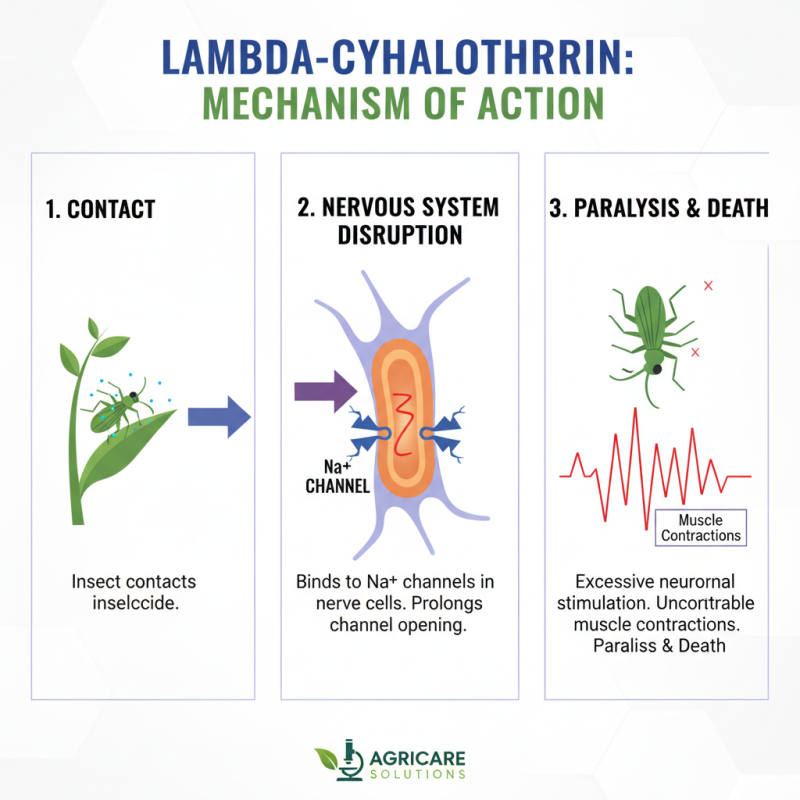
Lambda cyhalothrin is a potent insecticide widely used in agricultural practices, renowned for its effectiveness against a variety of pests. The key mechanisms of action of lambda cyhalothrin primarily revolve around its ability to disrupt the nervous system of insects. When insects come into contact with lambda cyhalothrin, it binds to the sodium channels in nerve cell membranes. This binding prolongs the opening of these channels, leading to excessive neuronal stimulation. As a consequence, insects experience uncontrollable muscle contractions and, ultimately, paralysis, resulting in their death.
Furthermore, lambda cyhalothrin exhibits significant residual activity, enabling it to provide prolonged protection against pest populations. This sustained action is crucial for effective pest control, particularly in crops that require extended periods of pest management. The insecticide not only acts rapidly upon contact but also continues to protect plants from new infestations over time. Additionally, it is important to note that lambda cyhalothrin is effective against a wide range of insect species, targeting both chewers and suckers, which broadens its applicability in various agricultural settings. This multifaceted action and persistence in the environment make lambda cyhalothrin a valuable tool for sustainable pest management in agriculture.
Environmental Impact and Safety Considerations
When considering the environmental impact and safety of Lambda Cyhalothrin in pest control and agriculture, it is essential to acknowledge both its effectiveness and potential risks. As a synthetic pyrethroid, Lambda Cyhalothrin acts as a neurotoxin to insects, effectively managing pest populations while minimizing damage to crops. However, its effects on non-target organisms must be carefully evaluated. Research indicates that while Lambda Cyhalothrin is less harmful to beneficial insects compared to more traditional pesticides, it can still pose risks to aquatic life and pollinators if used indiscriminately.
Moreover, safety considerations for human health play a crucial role in its application. Protective measures are advised for agricultural workers handling this chemical, including the use of personal protective equipment to mitigate exposure risks. Additionally, adherence to recommended usage guidelines and application rates can further reduce any potential negative impacts on both the environment and human well-being. Ongoing studies and regulatory assessments are critical to ensuring that Lambda Cyhalothrin remains a viable option for pest control while safeguarding ecosystems and public health.
Top 10 Benefits of Lambda Cyhalothrin for Pest Control and Agriculture
Comparative Effectiveness Against Other Pesticides
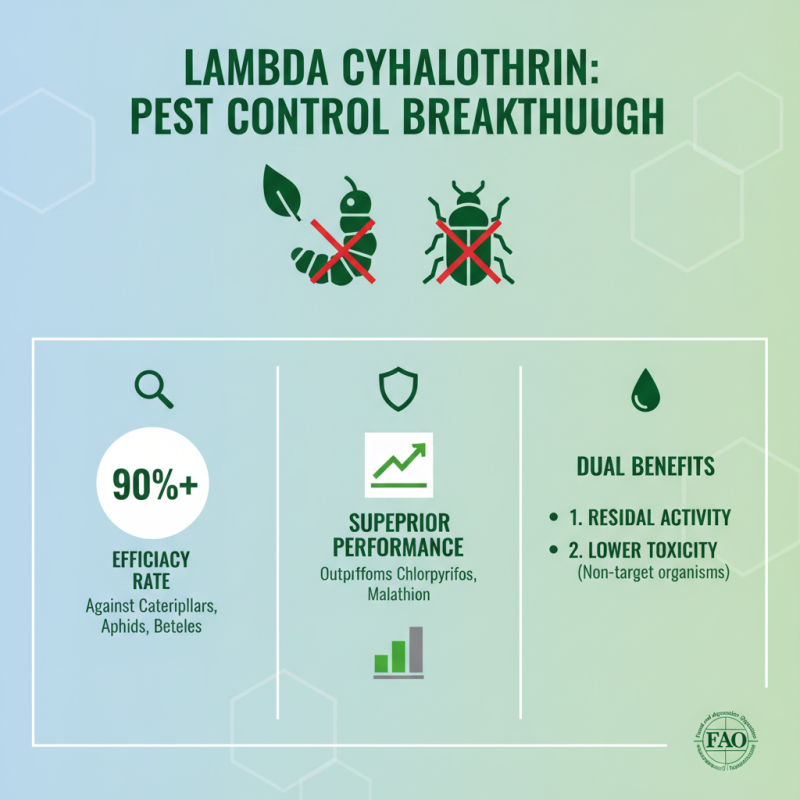
Lambda cyhalothrin has gained significant attention in the agricultural sector due to its effectiveness as a pesticide. According to a report by the FAO (Food and Agriculture Organization), lambda cyhalothrin demonstrates a remarkably high efficacy rate, achieving over 90% effectiveness against a wide range of pests, including caterpillars, aphids, and beetles. This level of effectiveness is crucial for farmers who seek reliable solutions to safeguard their crops from pests that threaten yield and quality. In comparative studies, lambda cyhalothrin has been shown to outperform traditional pesticides such as chlorpyrifos and malathion, particularly in its residual activity and lower toxicity to non-target organisms.
Moreover, lambda cyhalothrin exhibits a unique mode of action, which disrupts the nervous system of insects more efficiently than many conventional pesticides. Data from various agricultural studies suggest that lambda cyhalothrin's rapid knockdown effect leads to a quicker resolution of pest problems, enabling farmers to maintain healthier fields with less damage. Furthermore, the compound's lower environmental toxicity profile makes it a favorable choice for integrated pest management programs. As such, lambda cyhalothrin not only enhances crop protection but also supports sustainable agricultural practices, reflecting a growing shift in the industry towards more responsible chemical usage.
Applications in Agriculture and Crop Protection
Lambda cyhalothrin, a synthetic pyrethroid, has emerged as a powerful tool in agricultural practices, particularly in pest management and crop protection. Its broad-spectrum insecticidal activity makes it effective against a multitude of pests that threaten crops. According to a report from the Food and Agriculture Organization (FAO), the proper application of lambda cyhalothrin can lead to a yield increase of up to 20% in affected crops, underscoring its significance in enhancing agricultural productivity.
Furthermore, lambda cyhalothrin is utilized in integrated pest management (IPM) strategies, demonstrating its versatility and safety profile. Studies indicate that when used as part of an IPM approach, lambda cyhalothrin helps minimize pesticide resistance development among pests, promoting sustainable agricultural practices. A 2020 survey by the National Agricultural Statistics Service (NASS) highlighted that regions implementing lambda cyhalothrin in their pest control programs reported a 30% decrease in pest populations compared to traditional methods. This not only improves crop health and quantity but also supports environmental stewardship by reducing the overall chemical load in farming systems.